Commercial structures house companies, offices, retail locations, and other amenities, acting as thriving economic centres. These buildings are designed to meet a variety of resident demands while also offering a comfortable, safe, and productive environment. A sophisticated network of electrical systems, with the commercial cable at its centre, is responsible for the smooth operation of these contemporary business facilities.
The Development of Commercial Structures
From the modest trade stations of ancient civilizations to the imposing skyscrapers and cutting-edge office complexes of the present, commercial structures have come a long way. Commercial building functioning and design have changed throughout time to accommodate the shifting demands of companies and the expanding urban environment. The following are some significant developments in commercial architecture:
Technological Developments: The development and management of commercial buildings have undergone a revolution. For improving occupant comfort, maximising energy consumption, and simplifying facility management, smart building systems, energy-efficient technology, and automation have become essential.
Green building initiatives have become more popular as a result of the push for sustainability. These structures put an emphasis on energy efficiency, integrating renewable energy sources, and using environmentally friendly building materials. These eco-friendly buildings lessen their carbon footprint and help to create a more sustainable future.
Integration of Smart Solutions: Modern commercial buildings integrate numerous systems, such as lighting, HVAC, security, and access control, using the Internet of Things (IoT). Building efficiency, security, and tenant experiences are all improved by smart solutions.

Security and safety are still key priorities in commercial structures. Modern security systems, emergency lighting, and advanced fire protection systems assure the safety of people and preserve priceless assets.
Flexibility and adaptability are increasingly emphasised in commercial building design in order to meet changing corporate demands. Technology integration, modular office designs, and dynamic work environments facilitate future expansion.
Elevators and escalators are crucial vertical transit systems in the busy world of commercial buildings, enabling easy circulation of people and products within the building. The commercial cable is at the centre of these crucial systems, driving and regulating their effective and dependable functioning. Commercial cables are specifically used in lifts and escalators for a variety of purposes, including power transfer, control signal distribution, safety, and durability.
Power Transmission: The main means of power transmission in escalators and lifts is via commercial cables. They link the motors and control panels that power the movement of the elevators and escalators to the electrical power supply. Commercial cables provide a steady and continuous power supply that permits smooth and effective vertical transportation by being built
to accommodate the large electrical currents needed to run these heavy-duty devices.
Distribution of Control Signals: To transfer control signals between lift and escalator control panels and other components, commercial cables are essential. The escalators and lifts’ speed, direction, and stopping places are determined by these control signals, assuring accurate and secure mobility. Commercial cables’ dependability in delivering these signals is essential for keeping precise control over the transportation systems and avoiding any interruptions that might cause problems or pose a threat to safety.
Because the lives and wellbeing of passengers are at risk in lift and escalator systems, safety is of the utmost importance. Commercial cables have been built with safety in mind, and they include fire-resistant features that stop the spread of flames in the event of a fire. In the cramped areas of lifts and escalators, this fire resistance is essential for reducing possible threats to users and giving extra time for a safe exit.
Durability and Mechanical Strength: Because escalators and lifts are continuously used, their mechanical strength is a crucial consideration. These cables are designed to resist mechanical deterioration, assuring long-lasting performance and reducing the need for routine maintenance. Commercial cables’ durable construction helps ensure that lifts and escalators run continuously and reliably, minimising downtime and raising customer satisfaction.
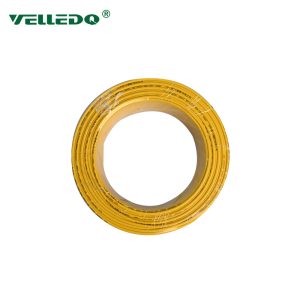
Compliance with Safety Standards: To safeguard passengers, lifts and escalators must adhere to strict safety rules and regulations. Commercial cables are compliant with the essential industry standards and safety criteria because they fulfil such requirements. This compliance gives building owners, facility managers, and residents peace of mind and confidence in the dependable operation of the lifts and escalators by ensuring that they function in line with safety requirements.
In conclusion, the specialised use of commercial cables in lifts and escalators highlights the importance of these materials in facilitating the quick and secure movement of people and objects within commercial structures. Commercial cables provide a substantial contribution to the dependable and efficient functioning of these vital transportation networks, including power transmission and control signal distribution, as well as fire resistance, durability, and compliance with safety regulations. Commercial cables will remain crucial in taking vertical transportation to new levels of effectiveness, safety, and convenience as commercial buildings continue to develop with cutting-edge technology and safety measures.
Smooth integration and compatibility are essential in the changing environment of commercial buildings to guarantee the efficient operation of electrical systems. Commercial cables are crucial in this respect since they provide great compatibility with common fittings and accessories. This particular use of commercial cables streamlines installation procedures and improves the overall effectiveness of the building’s electrical infrastructure. Commercial cables are standardised, allowing engineers, architects, and facility managers to easily connect with a broad variety of electrical devices and equipment that are often used in commercial facilities.
Commercial cables are widely accessible on the market because to their compatibility with electrical outlets, switches, distribution boards, and other electrical components. During building and restoration projects, less time and effort is needed due to the installation process’s simplicity and compatibility with common fittings. Commercial cables are standardised, which guarantees consistency and uniformity across the electrical system and makes it simpler to operate and maintain the building’s electrical infrastructure over time. The compatibility of commercial cables with standard fittings offers a dependable and effective electrical solution for commercial buildings, providing seamless connection and uniform performance throughout the structure, whether it is a new construction or retrofit project.
In the intricate electrical systems of contemporary commercial buildings, where a steady supply of energy is essential to support a variety of functions, efficient power transmission is of the utmost significance. Commercial cable stands out as a crucial participant in this scenario, excelling in its particular use of effective power transmission. Commercial cables are made with little electrical resistance in mind, resulting in minimal energy loss while power is transported from the source to different electrical equipment. Commercial cables have low electrical resistance, which reduces heat production during power transmission, improving energy efficiency and lowering costs.
Commercial cables optimise energy use by effectively transporting electrical power, making them an eco-friendly option that supports sustainability objectives in commercial building designs. Additionally, the smooth functioning of electrical equipment, lighting systems, HVAC units, and other crucial components is supported by the continuous and reliable supply of energy, which leads to improved system performance when using BV cables for power transmission. This reliable power supply lowers the possibility of equipment failure and downtime, increasing productivity and occupant comfort in the commercial environment. Commercial cables stand as a dependable and effective option for power transmission, playing a critical part in powering the future of sustainable and high-performance commercial structures as commercial buildings continue to adopt energy-saving practises and technologies.