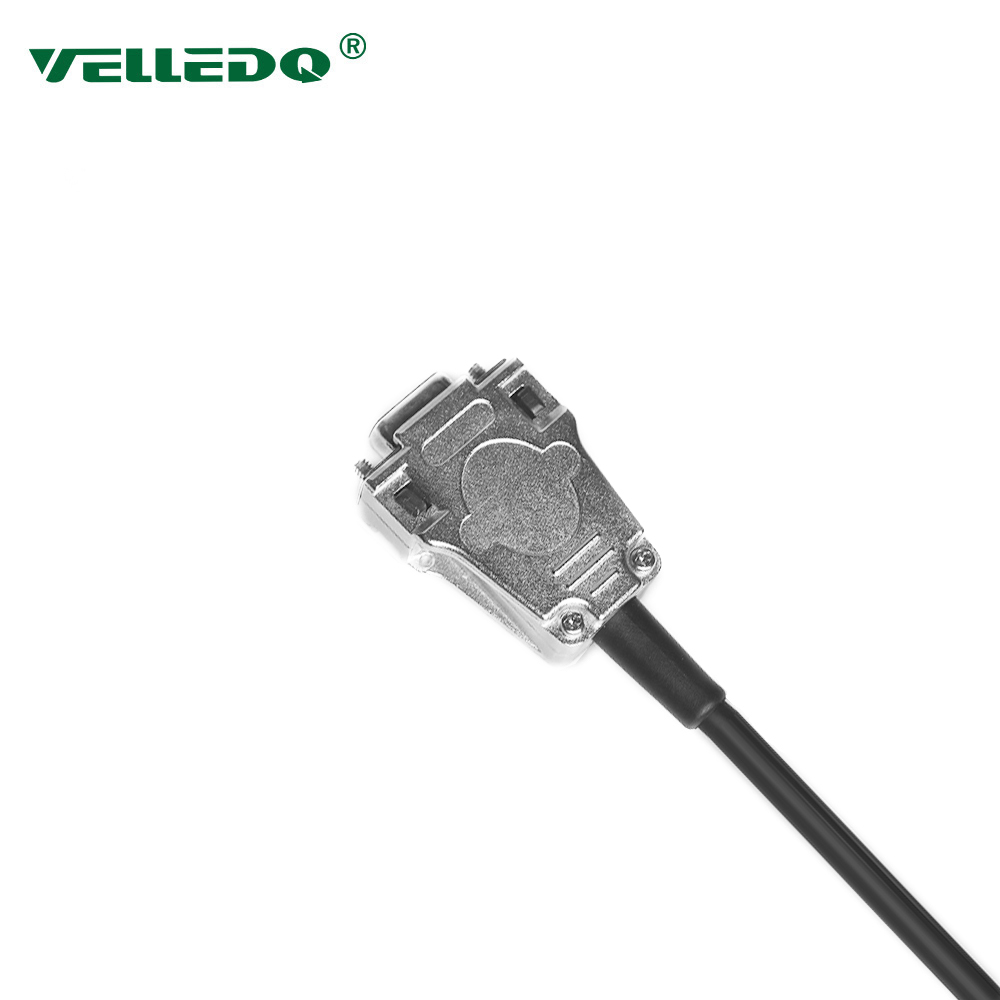
In today’s interconnected world, telecommunication equipment plays a pivotal role in facilitating seamless communication and information exchange. From the earliest days of telegraphs to modern-day high-speed internet, telecommunication equipment has evolved significantly. One crucial component that enables the reliable transmission of data and signals within telecommunication equipment is the D-Sub cable.
Telecommunication equipment refers to a wide range of devices and systems designed to transmit, receive, and process information over long distances. These devices form the backbone of our modern communication infrastructure, enabling the seamless exchange of voice, data, and multimedia content.Telecommunication equipment encompasses a diverse range of technologies, including telephones, mobile phones, fax machines, modems, routers, switches, optical fiber networks, and satellite communication systems. Each of these devices has its unique functionalities and specifications, but they all share a common goal: to establish effective communication channels.
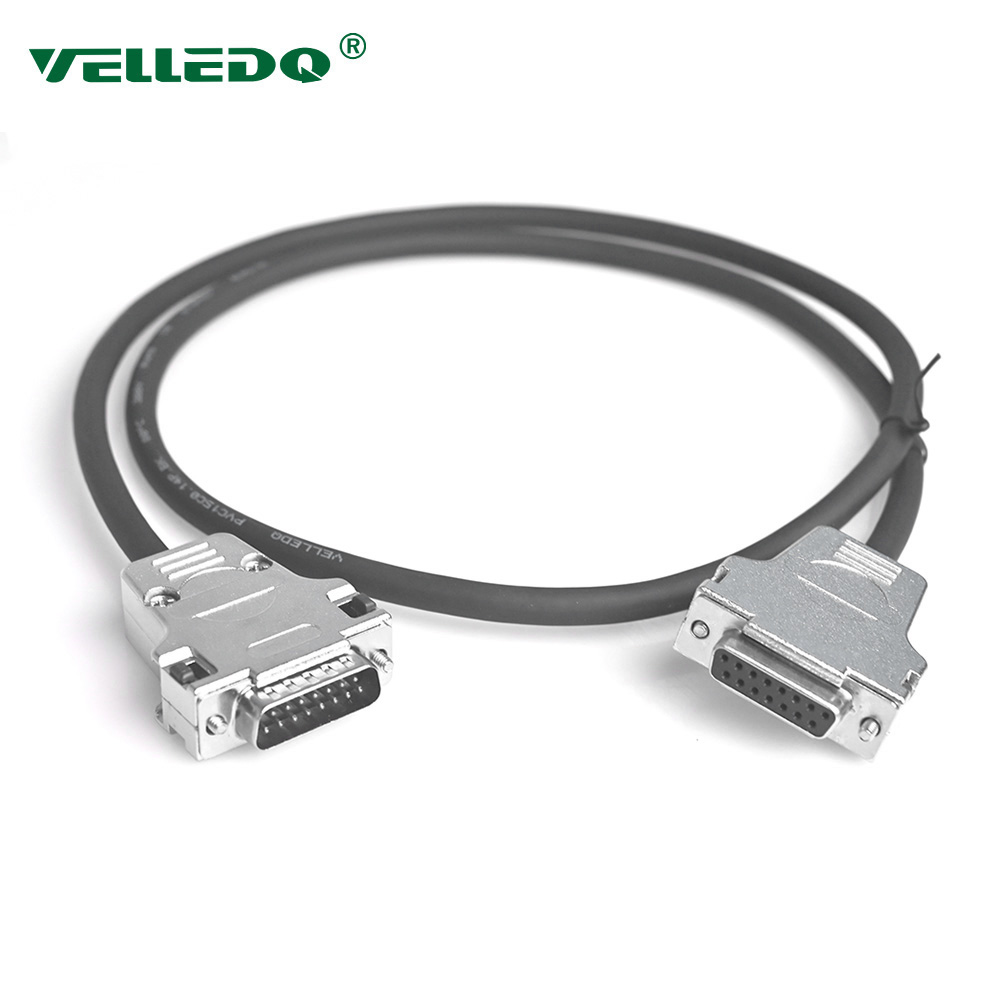
D-Sub cables, also known as D-Subminiature cables, are widely used in telecommunication equipment due to their versatility, durability, and reliability. These cables utilize the D-Sub connector, which features multiple pins arranged in a distinctive D-shaped metal shell. The pins and the connector are designed to ensure secure connections and efficient data transfer.
 Applications of D-Sub Cables in Telecommunication Equipment
1.D-Sub cables play a crucial role in the specific application of network routers and switches within telecommunication equipment. These devices are responsible for directing data packets within local area networks (LANs) and wide area networks (WANs), ensuring efficient communication between various connected devices. In this context, D-Sub cables are used to establish connections between routers, switches, and other networking components. They provide a reliable means of transmitting data signals, allowing for seamless communication between different nodes of the network. D-Sub cables are capable of handling high-speed data transfer and can support both analog and digital signals, making them ideal for the complex data transmission requirements of network routers and switches. With their robust construction, signal integrity, and ease of installation, D-Sub cables contribute to the overall performance and reliability of network infrastructure, enabling the smooth flow of data and ensuring that telecommunication networks operate efficiently.
2.D-Sub cables have a specific application in modems and telephony systems within telecommunication equipment.
Modems are crucial for transmitting data over telephone lines, while telephony systems enable voice communication. D-Sub cables play a vital role in connecting these devices, facilitating the exchange of data and voice signals. In modems, D-Sub cables are used to establish a reliable connection between the modem and the telephone line, ensuring accurate data transmission. They provide a secure and stable link, allowing modems to decode and encode digital signals for efficient communication. Similarly, in telephony systems, D-Sub cables are employed to connect telephones, fax machines, and other telephony equipment to the system’s main unit. These cables ensure the seamless transmission of voice signals, enabling clear and uninterrupted conversations. D-Sub cables are valued for their ability to minimize signal interference and maintain signal integrity, which is crucial for high-quality voice communication. With their durability, versatility, and ease of installation, D-Sub cables contribute significantly to the overall performance and functionality of modems and telephony systems in telecommunication equipment.
3.D-Sub cables serve a specific and critical application in satellite communication systems within telecommunication equipment. Satellite communication systems rely on the transmission of signals between ground stations, satellites, and other components of the network. D-Sub cables play a vital role in establishing the necessary connections in these systems. They are utilized to link ground stations with satellite communication equipment, such as antennas, receivers, transmitters, and control units. These cables enable the seamless transfer of signals between ground stations and satellites, facilitating reliable communication across vast distances. D-Sub cables offer the advantages of secure connections and robust signal transmission, ensuring the accurate exchange of data and commands in satellite communication systems. With their versatility, durability, and ability to handle high-frequency signals, D-Sub cables are an integral component in ensuring the efficient and uninterrupted operation of satellite communication systems in the telecommunication industry.

4.D-Sub cables play a specific and essential role in fiber optic networks within telecommunication equipment. Fiber optic networks utilize the transmission of data through optical fibers, which offer high-speed and long-distance communication capabilities.One of the key applications of D-Sub cables in fiber optic networks is the connection between networking devices and optical transceivers. These transceivers convert electrical signals into optical signals for transmission over the fiber optic cables and vice versa. D-Sub cables with specialized connectors, such as the D-Subminiature High-Density (HD) connectors, provide a reliable and secure interface between the transceivers and networking devices like routers, switches, and media converters.D-Sub cables also play a crucial role in the termination and management of fiber optic cables. Fiber optic cables terminate with connectors, and D-Sub cables with appropriate connectors are used to connect and disconnect these fiber optic cables within patch panels or distribution frames. The D-Sub connectors allow for easy installation, maintenance, and reconfiguration of fiber optic connections in the network infrastructure.Moreover, D-Sub cables with fiber optic adapters are employed for connecting fiber optic patch cords and pigtails.
These adapters, installed within patch panels or equipment ports,
provide a standardized interface for connecting different fiber optic connectors. D-Sub cables with fiber optic adapters ensure efficient and reliable interconnections between fiber optic cables, enabling the seamless flow of data in fiber optic networks.Another specific application of D-Sub cables in fiber optic networks is for equipment grounding and bonding. Proper grounding and bonding are essential for electrical safety and preventing electromagnetic interference. D-Sub cables with shielding and grounding capabilities are used to establish secure connections and provide a reliable grounding path for networking equipment, ensuring the integrity of the network’s electrical and signal systems.D-Sub cables serve crucial roles in fiber optic networks by facilitating connections between networking devices and optical transceivers, terminating and managing fiber optic cables, enabling interconnections through fiber optic adapters, and ensuring proper grounding and bonding. Their versatility, reliability, and compatibility make them indispensable components in the deployment and operation of efficient and high-performance fiber optic telecommunication networks.
5.D-Sub cables have specific and significant applications in data centers as an integral part of the telecommunication equipment infrastructure. Data centers are critical facilities that house a vast amount of computing and networking equipment, including servers, storage devices, and networking switches. One of the primary applications of D-Sub cables in data centers is connecting servers to networking switches. These cables establish the vital link between the servers and the network infrastructure, enabling data transfer between the server nodes and facilitating communication with other devices within the data center. D-Sub cables provide a reliable and high-speed connection, supporting the transmission of large volumes of data and ensuring low-latency communication.In data centers, D-Sub cables are also used for interconnecting storage devices, such as storage area network (SAN) arrays and network-attached storage (NAS) devices. These cables facilitate the transfer of data between storage devices and servers, ensuring efficient storage management and retrieval of information. D-Sub cables with appropriate connectors offer a secure and reliable connection that minimizes data loss or corruption during data transfer.Furthermore, D-Sub cables are employed in data centers for connecting networking equipment, such as switches, routers, and firewalls. These cables provide the necessary connections to establish and manage the network infrastructure within the data center. Whether it’s connecting switches to routers or linking networking devices to the central management console, D-Sub cables ensure efficient and reliable data communication.D-Sub cables also play a role in cable management within data centers. They are used to connect and organize cables in server racks and patch panels, ensuring a neat and organized cabling system. By reducing cable clutter and maintaining proper cable management practices, D-Sub cables help improve airflow, reduce the risk of cable damage, and facilitate efficient maintenance and troubleshooting processes.D-Sub cables have crucial applications in data centers as they connect servers to networking switches, interconnect storage devices, establish connections between networking equipment, and facilitate cable management. Their reliability, compatibility, and high-speed capabilities contribute to the smooth and efficient functioning of data centers, ensuring seamless data transmission and facilitating the management of complex telecommunication equipment infrastructures.