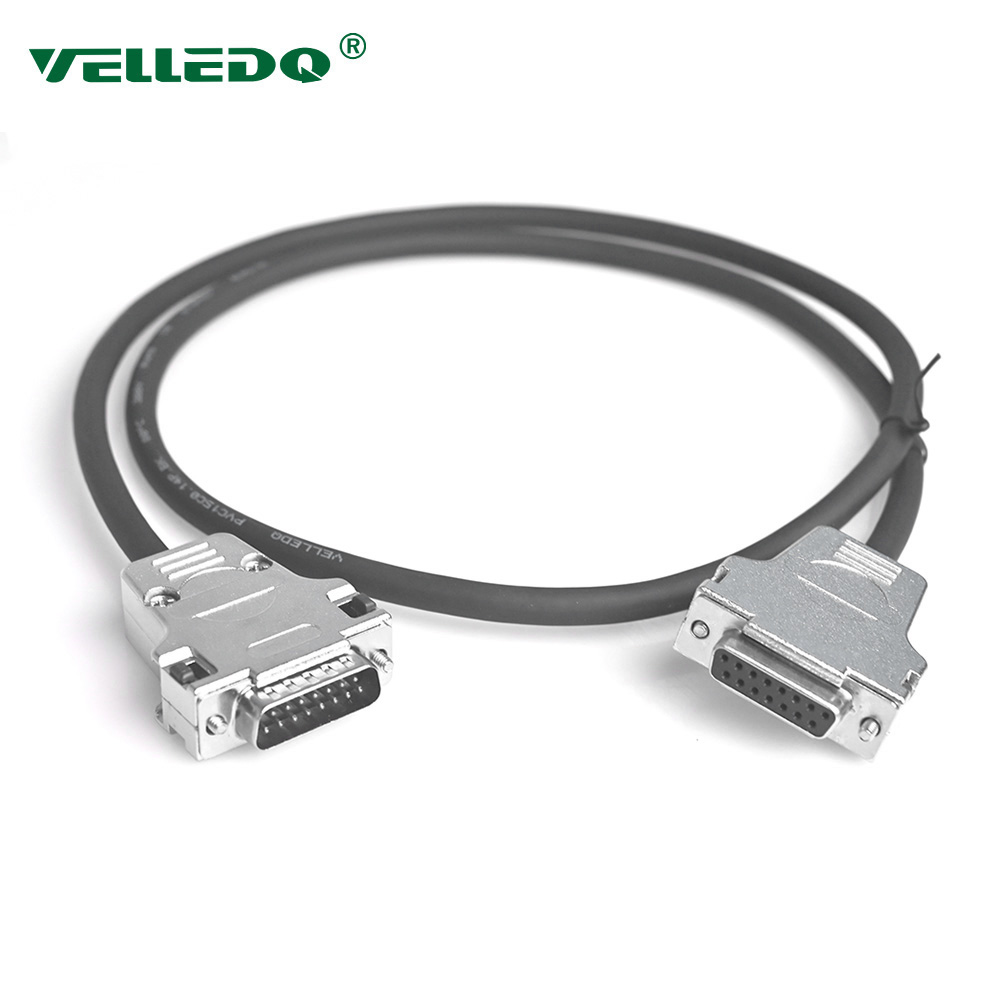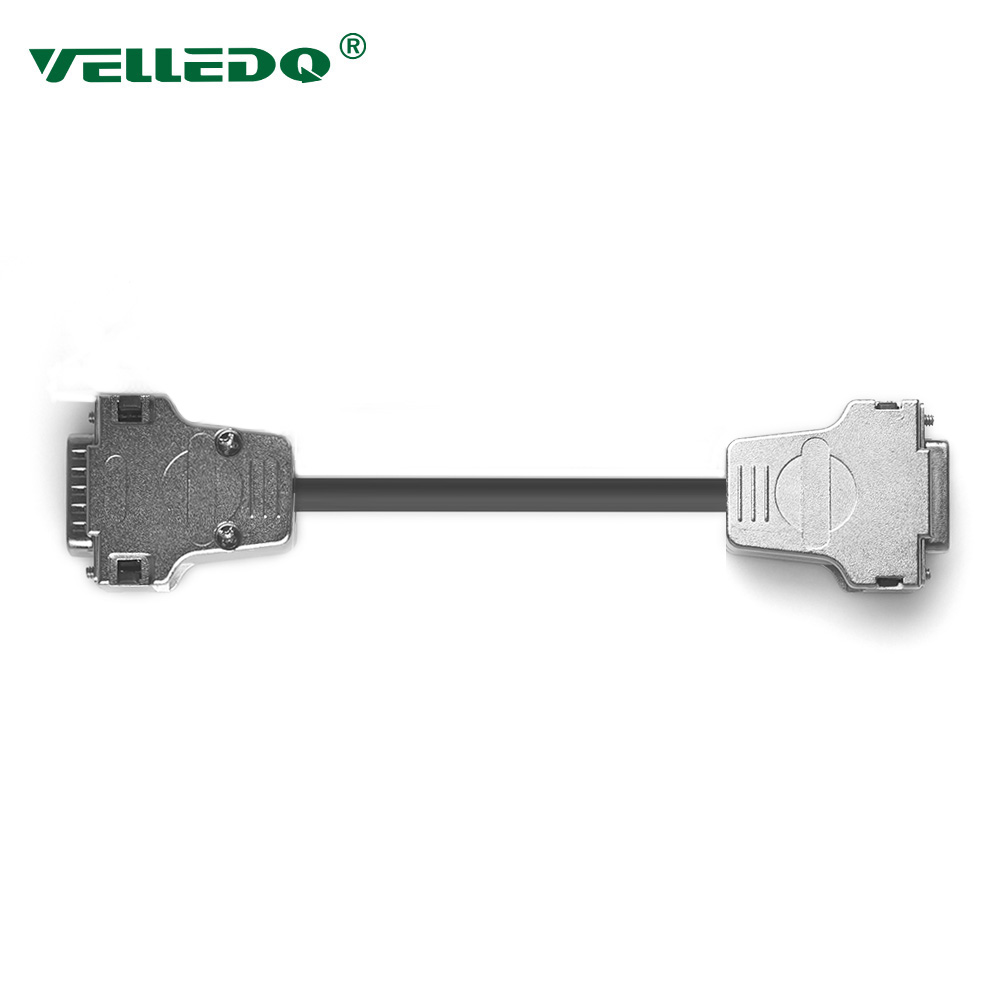
In an increasingly interconnected world, the demand for advanced optical devices and optical sensors has surged, revolutionizing various industries and unlocking new possibilities for communication, data transmission, and sensing applications. Optical technology, leveraging the properties of light, offers advantages like high data transfer rates, immunity to electromagnetic interference, and precision sensing capabilities. D-Sub to D-Sub cable in enabling seamless connectivity within these innovative optical systems.
1. Understanding Optical Devices and Optical Sensors
1.1 Optical Devices
Optical devices, also known as optoelectronic devices, utilize the principles of optics and electronics to generate, modulate, amplify, or detect light signals. These devices rely on light as a medium for information transfer, opening up new possibilities in high-speed communication, data storage, and signal processing. Optical devices include light-emitting diodes (LEDs), lasers, photodiodes, optical amplifiers, and modulators, among others. These components are essential building blocks in optical communication systems, data centers, fiber-optic networks, and various other applications.
1.2 Optical Sensors
Optical sensors, on the other hand, are designed to measure physical properties by detecting changes in light. These sensors exploit the interaction of light with different materials and structures to provide accurate and reliable measurements of parameters such as distance, temperature, pressure, and gas concentrations. Optical sensors find applications in environmental monitoring, industrial automation, biomedical devices, and autonomous vehicles, among many others.
2. The Advantages of Optical Technology
The adoption of optical technology offers a myriad of advantages over traditional electronic systems:
2.1 High Data Transfer Rates
Optical devices can transmit data at incredibly high speeds, making them invaluable in telecommunications and data centers. The high bandwidth of optical communication enables rapid information exchange over long distances, minimizing latency and enhancing overall network performance.
2.2 Immunity to Electromagnetic Interference
Optical signals are not affected by electromagnetic interference, making optical systems ideal for use in electrically noisy environments and in applications requiring robust and reliable communication.
2.3 Long-Distance Signal Transmission
Optical fibers allow for long-distance signal transmission without significant loss in signal quality, enabling communication over vast geographical areas with minimal signal attenuation.
2.4 Compact Size and Lightweight
Optical devices are typically smaller and lighter than their electronic counterparts, making them ideal for applications where space and weight constraints are critical.
2.5 Enhanced Sensing Capabilities
Optical sensors offer high precision and sensitivity, enabling accurate measurements of physical parameters in various challenging environments.

3. Applications of Optical Devices and Optical Sensors
3.1 Telecommunications
Optical devices are the backbone of modern telecommunications networks, facilitating high-speed data transmission over long distances. Fiber-optic cables and components, such as lasers and photodetectors, form the basis of high-capacity internet connections, video streaming, and telecommunication infrastructure worldwide.
3.2 Data Centers
In data centers, optical devices enable fast and efficient data communication between servers and storage systems. Optical interconnects offer high-speed, low-latency communication, minimizing bottlenecks and ensuring smooth data flow within the data center infrastructure.
3.3 Medical Imaging and Diagnostics
Optical sensors are widely used in medical imaging and diagnostics. Optical coherence tomography (OCT) and laser-based fluorescence imaging are examples of optical techniques used in ophthalmology, cardiology, and cancer detection.
3.4 Industrial Automation and Sensing
In industrial settings, optical sensors play a critical role in automation and control. Optical encoders provide precise position and motion measurements in manufacturing processes and robotics.
3.5 Environmental Monitoring
Optical sensors are deployed in environmental monitoring systems to measure air and water quality, detect pollutants, and monitor climate conditions.
3.6 Autonomous Vehicles
Optical sensors, including LiDAR (Light Detection and Ranging) systems, are essential in autonomous vehicles for mapping and obstacle detection.
3.7 Aerospace and Defense
In aerospace and defense applications, optical devices find use in communication systems, navigation, targeting, and surveillance.
4. The Role of D-Sub to D-Sub Cable in Optical Devices and Optical Sensors
4.1 Optical Communication Systems
D-Sub to D-Sub cable play a vital role in optical communication systems, where they are used to connect optical transceivers, lasers, and photodetectors to the main system. These connectors ensure reliable and secure connections, enabling seamless data transfer between different components.
4.2 Data Centers
In data centers, where optical communication is critical, D-Sub to D-Sub cable provide a robust and standardized interface for optical interconnects. They are used to connect optical transceivers to switches and routers, facilitating high-speed data transmission within the data center environment.
4.3 Sensing Applications
D-Sub to D-Sub cable are employed in optical sensor systems to provide power and data connections to the sensors. They ensure stable and efficient communication between the sensors and the data acquisition or control systems.
4.4 Industrial Automation
In industrial automation, D-Sub to D-Sub cable are used to connect optical encoders and sensors to control systems, enabling accurate and reliable position and motion measurements.
4.5 Environmental Monitoring
D-Sub to D-Sub cable play a role in environmental monitoring systems by connecting optical sensors that detect pollutants, particulate matter, and gases to data loggers or monitoring equipment.
4.6 Aerospace and Defense
In aerospace and defense applications, D-Sub to D-Sub cable are used in optical communication systems, LiDAR sensors, and surveillance equipment, ensuring secure and reliable connections in demanding environments.

5. Advancements in D-Sub to D-Sub Cable Technology
As optical technology continues to evolve, so does the role of D-Sub connectors. Manufacturers are developing advanced D-Sub to D-Sub cable variants, such as high-density and high-speed versions, to meet the increasing demands of optical devices and optical sensor applications. These connectors are designed to handle higher data rates and provide increased reliability, making them suitable for the most demanding optical systems.
6. The Importance of Reliable Connectivity in Optical Systems
In the realm of optical devices and optical sensors, reliable connectivity is of paramount importance to ensure the smooth functioning of these advanced technologies. D-Sub to D-Sub cable have proven to be a reliable choice in optical systems, offering secure and stable connections that are essential for high-performance data transmission and precision sensing.
6.1 Data Integrity and Accuracy
In optical communication systems, data integrity is critical to avoid data loss or corruption during transmission. D-Sub to D-Sub cable provide a tight and secure fit, minimizing signal losses and maintaining data accuracy. This is especially crucial in high-speed data centers and telecommunications networks, where data integrity is essential for efficient and error-free communication.
6.2 Precision Sensing and Control
In optical sensors used for precise measurements, such as in medical imaging or industrial automation, accurate data acquisition is vital. D-Sub to D-Sub cable ensure a consistent and reliable connection between the sensors and the data acquisition systems, guaranteeing accurate sensing and control.
6.3 Durability and Longevity
Optical devices and sensors are often deployed in challenging environments, including harsh industrial settings, outdoor installations, and aerospace applications. D-Sub to D-Sub cable’ rugged design and durable construction make them well-suited for these demanding conditions, ensuring that the optical systems continue to operate reliably over an extended period.
7. Future Innovations in Optical Devices and Optical Sensors with D-Sub to D-Sub Cable
As the demand for optical devices and optical sensors continues to grow, innovations in D-Sub to D-Sub cable are anticipated to complement and enhance the capabilities of these cutting-edge technologies.
7.1 Miniaturization and High-Density Connectors
As the trend towards smaller and more compact devices continues, miniaturized D-Sub to D-Sub cable are likely to emerge, providing a high-density solution for space-constrained optical systems. These connectors will allow for increased data capacity while maintaining the robustness and reliability characteristic of D-Sub to D-Sub cable.
7.2 Enhanced Performance
Advancements in D-Sub to D-Sub cable technology will focus on improving their performance characteristics, such as increasing data transfer rates and reducing signal losses. Higher-speed D-Sub to D-Sub cable will support the growing demands of optical communication systems and data centers, contributing to even faster and more efficient data transmission.
7.3 Integration of Optoelectronics
Future developments may see the integration of optoelectronic components directly into D-Sub to D-Sub cable, further simplifying the connection and deployment of optical devices and sensors. This integration could lead to more streamlined optical systems with improved functionality and reduced installation complexity.
Conclusion
Optical devices and optical sensors have transformed industries by offering high-speed communication, precise sensing capabilities, and immunity to electromagnetic interference. From telecommunications to medical imaging and from industrial automation to environmental monitoring, optical technology is at the forefront of innovation. D-Sub to D-Sub cable, with their robustness and reliability, play a critical role in facilitating seamless connectivity in these advanced optical systems. As optical technology continues to advance, D-Sub to D-Sub cable will remain an essential component in enabling the transfer of data and power, further illuminating the future of modern technology across various sectors.