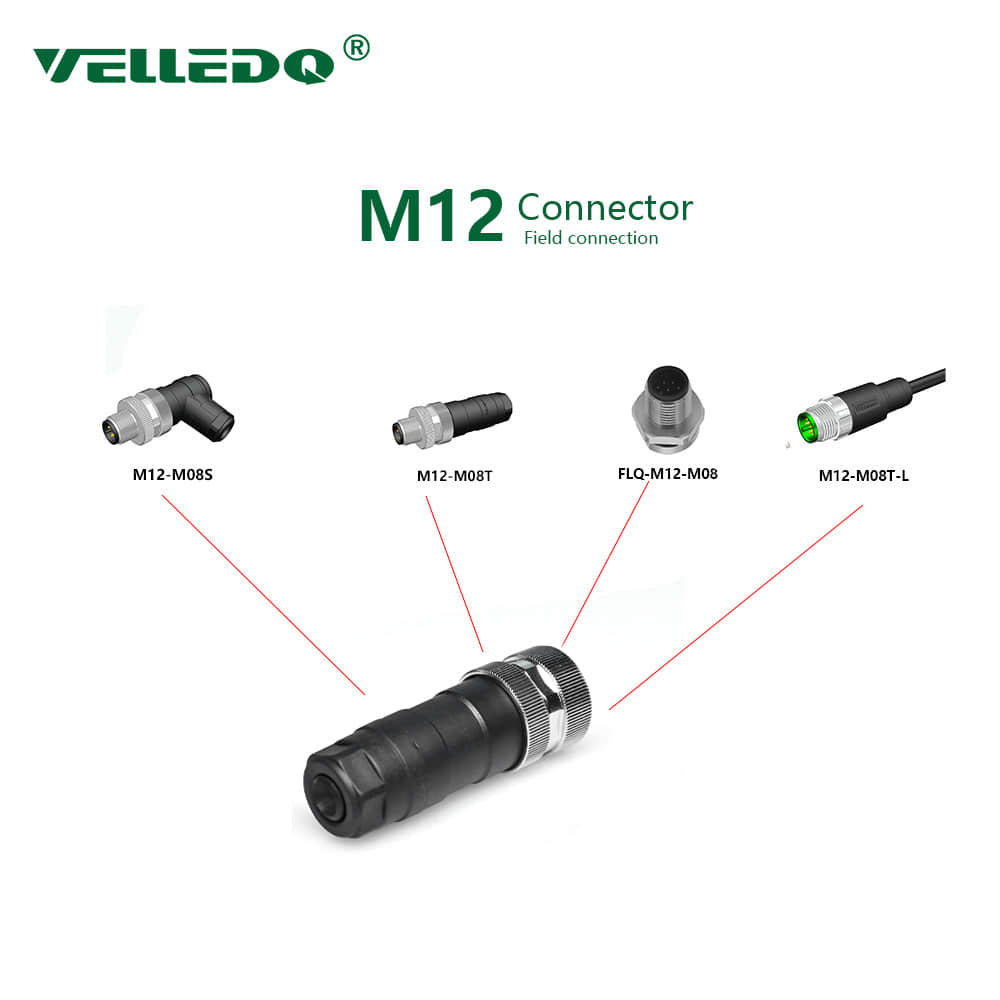
In today’s rapidly evolving industrial landscape, automation has become a driving force behind increased productivity and efficiency. Automatic production equipment plays a pivotal role in streamlining manufacturing processes, and one crucial component is the field wireable connectors.
1.Robotic Systems:
Field wireable connectors play a crucial role in robotic systems within automatic production equipment, enabling seamless communication and coordination between robots and peripheral devices. These connectors provide power and signal transmission capabilities that facilitate precise control and efficient operation of robotic movements. By establishing reliable connections with sensors, actuators, and controllers, field wireable connectors ensure seamless data exchange and feedback, contributing to enhanced automation efficiency in manufacturing processes.
The compact design of field wireable connectors make them well-suited for integration into robotic systems. Robots often operate in confined spaces, and the small form factor of field wireable connectors allows for easy installation and routing of cables. This compactness also reduces the overall weight and footprint of the robotic system, maximizing flexibility and maneuverability.
Moreover, the threaded locking mechanism of field wireable connectors ensures secure connections, even in high-vibration environments. This robust connectivity minimizes the risk of signal loss or interruption, maintaining the integrity of communication between the robot and its peripheral devices. With reliable connections provided by field wireable connectors, precise control and coordination of robotic movements are achieved, leading to improved accuracy and productivity.
Field wireable connectors are versatile and compatible with various types of sensors, actuators, and controllers commonly used in robotic systems. They offer a standardized interface, simplifying the integration process and allowing for seamless interchangeability of components. Whether it’s connecting proximity sensors, encoders, or motor drives, field wireable connectors provide a reliable and standardized connection point that ensures compatibility and interoperability within the robotic system.
In addition, field wireable connectors support high-speed data transmission, enabling real-time communication and feedback between the robot and its peripheral devices. This capability is crucial for tasks that require rapid response and synchronization, such as pick-and-place operations, assembly processes, and quality inspections. By leveraging the high-speed data transmission of field wireable connectors, robotic systems can operate with precision and efficiency, contributing to improved overall productivity in the automated production environment.
2.Machine Vision Systems:
Field wireable connectors play a crucial role in machine vision systems within automatic production equipment, providing reliable and efficient connectivity for seamless data transmission. Machine vision systems heavily rely on accurate data acquisition and transmission to perform tasks such as quality control, inspection, and measurement. Field wireable connectors serve as a vital link between cameras, lighting systems, and processing units in these systems. The compact form factor of Field wireable connectors allows for easy integration into space-constrained environments, making them well-suited for machine vision applications. Additionally, their rugged construction ensures durability and performance in harsh industrial conditions.
One of the advantages of field wireable connectors in machine vision systems is their ability to provide high-speed data transmission. The connectors are available in various configurations, including those specifically designed for Gigabit Ethernet transmission, allowing for image acquisition and processing. This high-speed data transfer capability is essential for machine vision applications that require quick analysis and decision-making based on visual information.
The secure connections offered by field wireable connectors also contribute to the reliability of machine vision systems. With their threaded locking mechanism, field wireable connectors ensure a robust and stable connection, minimizing the risk of signal loss or interruption. This is particularly important in industrial settings where vibrations and mechanical stresses are common. The dependable connections provided by field wireable connectors enable consistent and uninterrupted data flow, allowing machine vision systems to operate with precision and accuracy.
Another significant advantage of field wireable connectors is their compatibility with different types of machine vision components. Whether it’s cameras, lighting systems, lenses, or processing units, field wireable connectors offer a standardized interface that simplifies the integration process. This compatibility ensures interoperability between various components, streamlining the setup and maintenance of machine vision systems.
Moreover, field wireable connectors are available in different versions, including shielded variants, which provide electromagnetic compatibility (EMC) protection. This shielding helps to mitigate interference from other electrical components and signals, ensuring reliable data transmission without corruption or degradation. It enhances the overall performance of machine vision systems, enabling them to deliver accurate and consistent results.
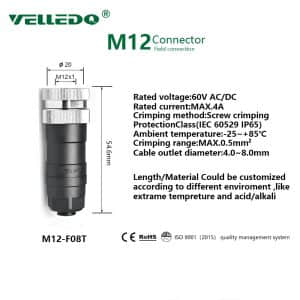
3.Control Systems and PLCs:
Field wireable connectors play a vital role in control systems and Programmable Logic Controllers (PLCs) within automatic production equipment, facilitating efficient and reliable connectivity between various components. These connectors serve as a crucial interface for establishing connections between control systems, I/O modules, and peripheral devices such as switches, push buttons, and indicators. The compact size and threaded locking mechanism of field wireable connectors ensure secure and robust connections, even in high-vibration environments commonly found in industrial settings. This robust connectivity enhances the overall stability and reliability of control systems, minimizing downtime and optimizing production efficiency.
One of the key advantages of field wireable connectors in control systems and PLCs is their versatility. These connectors support both power and signal transmission, allowing for seamless integration of different components within the automation system. Field wireable connectors can handle both low-power signals and higher current ratings, making them suitable for connecting a wide range of devices, including sensors, actuators, motors, and power supplies.
This versatility simplifies the wiring process, reduces the number of different connector types required, and streamlines the overall system design.
Moreover, the standardized nature of field wireable connectors ensures compatibility and interchangeability between different components. This standardized interface eliminates the need for custom connectors or adapters, simplifying installation and reducing costs. It also enables easy maintenance and replacement of components without requiring extensive reconfiguration or rewiring.
Another significant advantage of field wireable connectors in control systems is their resistance to environmental factors. The connectors are available in various materials and IP ratings, providing protection against moisture, dust, and other contaminants. This robust design allows field wireable connectors to operate reliably in demanding industrial environments, safeguarding the integrity of the connections and ensuring uninterrupted operation of control systems.
Furthermore, field wireable connectors support multiple communication protocols commonly used in control systems and PLCs, such as Ethernet, PROFINET, CAN bus, and DeviceNet. These connectors enable seamless integration of devices and modules within the automation network, facilitating data exchange, and coordination. The high-speed data transmission capabilities of field wireable connectors enable real-time monitoring and control, enhancing the responsiveness and efficiency of the automated production process.
4.Industrial Sensors:
Sensors are critical components in automatic production equipment, providing valuable data for process monitoring, control, and optimization. Field wireable connectors offer a standardized interface for connecting various types of sensors, including proximity sensors, temperature sensors, pressure sensors, and more. The robust design of field wireable connectors ensures secure connections, minimizing the risk of signal loss or interruption. Moreover, the versatility of field wireable connectors allows for easy integration with different sensor types, simplifying installation and maintenance procedures.
a.Communication Networks:
Efficient communication networks are essential for data exchange and coordination among different components of automatic production equipment. Field wireable connectors support various communication protocols, including Ethernet, PROFINET, CAN bus, and DeviceNet, enabling seamless integration of machines, devices, and control systems. The versatility of field wireable connectors allows for flexible network topologies, facilitating quick and easy installation of communication infrastructure. Whether used for local area networks or industrial fieldbus systems, field wireable connectors ensure reliable and high-speed data transmission, enhancing the overall performance of automated production lines.
b.Power Distribution:
M12 connectors are not limited to signal transmission alone; they also play a crucial role in power distribution within automatic production equipment. With their ability to handle higher current ratings, M12 connectors provide a safe and efficient solution for delivering power to motors, drives, and other power-hungry components. The robust design and secure connections of field wireable connectors minimize the risk of power interruptions, ensuring continuous and reliable operation of equipment.