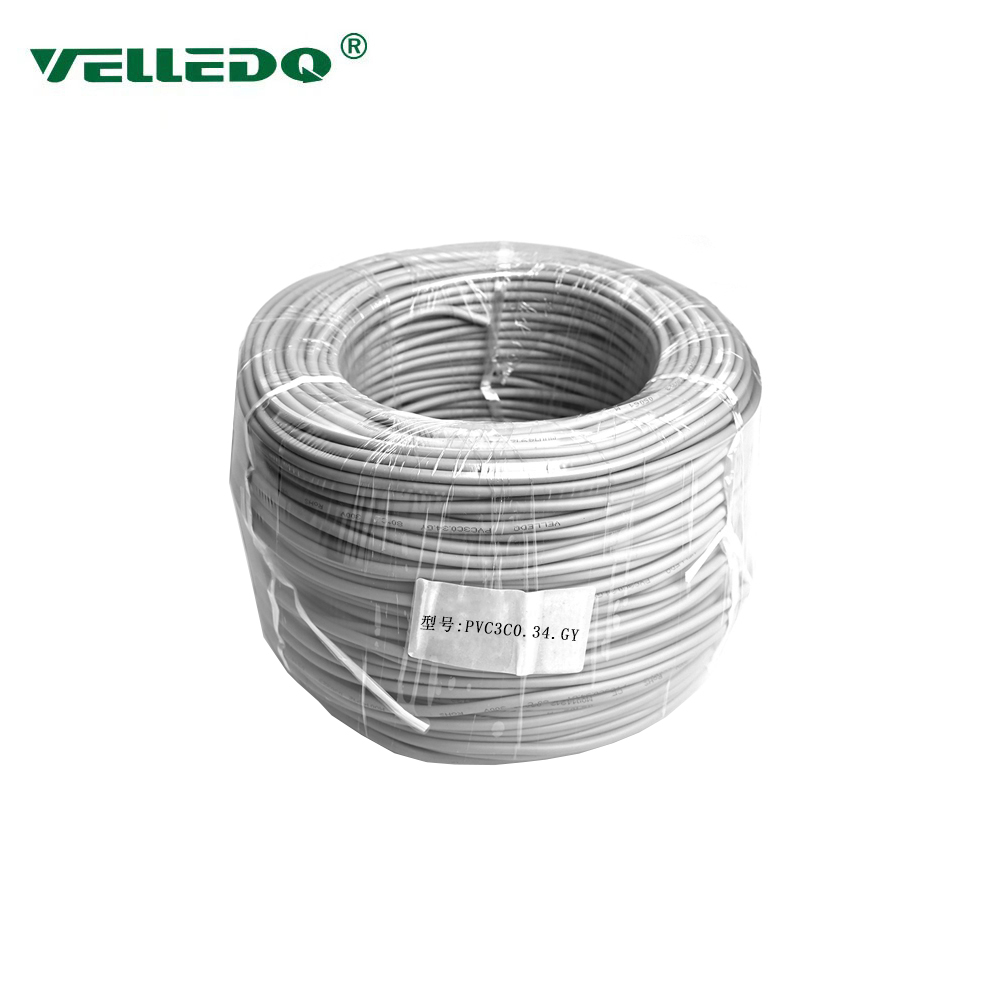
The introduction of automated production lines has caused a notable revolution in the industrial sector. By offering previously unheard-of levels of efficiency, uniformity, and accuracy, these cutting-edge technologies have completely changed the way goods are produced. An automated production line is a collection of linked devices that operate in unison and are often managed by computer systems to carry out different industrial activities. Modern manufacturing facilities now rely heavily on automated production lines for everything from raw material processing to final product assembly. Industrial cable and wire, however, serve a crucial role in facilitating smooth operations and data exchange inside these complex systems behind the scenes.
I. Automatic Production Line Introduction
The problems created by manual, labor-intensive industrial processes have given rise to an answer: automatic production lines. These manufacturing lines include a variety of tools, robots, and conveyor systems, each carrying out a particular duty. Components move along the line in a well-coordinated and synchronised way, operating as a single, cohesive unit. Higher production volumes, improved product consistency, and lower labour costs are all possible with this configuration.
To meet various manufacturing processes, the automated production line may be modified and adjusted. For instance, automated production lines are often used in the automobile sector to assemble cars, while they are utilised in the food industry to package and prepare goods. Regardless of the application, automated manufacturing lines include the following fundamental characteristics:
Robotics: Industrial robots are a key component of autonomous manufacturing lines, handling materials with outstanding accuracy and speed while welding, painting, and assembling.
Conveyor systems: These systems move parts or products through different production line stages, guaranteeing a steady stream of supplies and increasing productivity.
PLCs, or programmable logic controllers, are the brains of an automated manufacturing line because they direct and coordinate the operations of machines and robots.
Sensors and vision systems: Sensors and vision systems are used throughout the production line to check component quality, spot flaws, and provide the control system real-time feedback.
Application
1.In the automotive sector, industrial cable and wire are vital to the efficient running of automated manufacturing lines and have a variety of uses. The automobile industry significantly depends on automated production techniques to produce enough cars while maintaining tight quality requirements. In the car industry, automatic manufacturing lines are used for a variety of jobs, including body welding, painting, assembly, and testing. At the core of these procedures are industrial cables, which enable the smooth transfer of power, control signals, and data between different machines, robots, and sensors.
Robotic welding is one of the main uses for industrial cable and wire in the automated car manufacturing line. Robotic arms with welding equipment join the body parts of vehicles with accuracy and efficiency. These welding robots are powered and controlled by industrial cable and wire, resulting in precise and reliable welds throughout the manufacturing process. As the robotic arms travel between various welding spots, these cables must be made to resist the high temperatures produced during welding as well as continual bending and twisting.
Robotic painting systems are part of automated manufacturing lines in the automobile industry.
These systems use robotic arms equipped with paint cans to paint car bodywork. Industrial cable and wire allow power and control signals to be sent to the painting robots, guaranteeing a precise and efficient painting procedure. To resist the frequent motions and severe painting conditions while preserving signal integrity, these cables must have exceptional flexibility and toughness.
Furthermore, the assembly procedures on the vehicle manufacturing line depend on industrial cable and wire. Automated assembly robots do activities including fastener attachment, component installation, and electrical system connection. These assembly robots receive power and control signals through industrial cable and wire, which enables them to do accurate and effective assembly duties. As an example, cables are essential for powering the electric screwdrivers used in fastening activities, guaranteeing uniform torque and effective assembly.
Control cables provide data exchange throughout the automated car manufacturing line in addition to power transfer. Real-time data interchange is necessary for sensors and vision systems used for quality control and monitoring. The flawless data transmission between these sensors and the central control system is made possible via industrial cable and wire, allowing for quick changes and corrections throughout the manufacturing process.
In the automotive sector, safety is of the highest significance. For this reason, industrial cable and wire used in automated manufacturing lines must meet stringent safety criteria. To protect employees’ safety and eliminate possible risks, specialised cables with qualities that make them resistant to fire, oil, and chemicals are used.
The automated manufacturing lines used in the automobile sector need industrial cable and wire as a necessary component. They have a variety of functions, including allowing robotic welding and painting, precision assembly work, data exchange, and network connection. In the manufacturing of automobiles, the use of specialised industrial cable and wire of the highest calibre guarantees smooth operations, constant product quality, and increased safety. The progress of automated manufacturing processes and the direction of vehicle production will be influenced by the development and invention of industrial cable and wire as the automotive industry develops.
2. Industrial cable and wire are essential for the food industry’s automated manufacturing lines to operate effectively, hygienically, and safely. To produce high-quality items for customers, the food production process requires dexterity, accuracy, and adherence to stringent sanitary requirements. Packaging, bottling, processing, and labelling are just a few of the activities that automated manufacturing lines in the food sector are designed to manage. These automated systems depend on industrial cable and wire to provide efficient power transfer, control signals, and data communication between machines, sensors, and control units.
The automated manufacturing lines for the food sector use industrial cable and wire extensively in the packing and bottling operations. Food items are moved down the manufacturing line using conveyor systems, which are powered by industrial cable and wire to provide a constant and effective flow of commodities. These cables must be built with durable outer jackets to survive continuous movement, abrasion, and, sometimes, washdown operations necessary to maintain hygiene requirements in locations where food is processed.
Powering robotic arms used for packing and palletizing requires the usage of industrial cable and wiring. These machines quickly and precisely handle delicate food goods, guarantee uniform
packing, and reduce the possibility of contamination. To resist the repeated motions and mechanical stress involved in robotic activities, the cables carrying power and control signals to these robots must be flexible and robust.
Additionally, the food sector demands strict quality control and oversight throughout every stage of manufacturing. Food goods are inspected for flaws, pollutants, and correct packing using sensors and visual systems. Real-time data transmission between these sensors and the central control system is made possible via industrial cable and wire, allowing quick feedback to make required modifications and keep the end product’s quality high.
In the food sector, cleanliness is of utmost importance, and industrial cable and wire used in robotic manufacturing lines must adhere to strict requirements of hygiene. In locations where direct contact with food is conceivable, specialised cables with sanitary design and smooth, cleanable surfaces are used. These sanitary wires aid in preventing bacterial development and guarantee adherence to food safety laws.
In order to maintain product quality and safety during food processing, temperature regulation is essential. Extreme temperatures must be withstood by the industrial cable and wire used in automated manufacturing lines in order to maintain continuous operations in both high- and low-temperature settings.
Industrial cable and wire used in the food sector must comply with regulatory criteria and certifications in addition to their physical characteristics. In order to fulfil the standards established by health and safety organisations, food-grade cables are specifically created to be non-toxic and safe for direct contact with food.
Industrial cable and wire are essential parts of the automated production lines used in the food industry because they make it easier to transmit power, control signals, and data. Industrial cable and wire support the smooth and effective manufacture of high-quality food items by supplying electricity to conveyor systems, allowing robotic activities, and facilitating quality control. Consumers will get safe and consistent food products thanks to the use of specialised, hygienic industrial cable and wire in the production of food, which guarantees adherence to stringent hygiene requirements, compliance with safety laws, and delivery of food items. Industrial cables will continue to be essential in supporting the food industry’s expansion and dedication to producing safe and high-quality food products as it continues to expand and embrace automation.