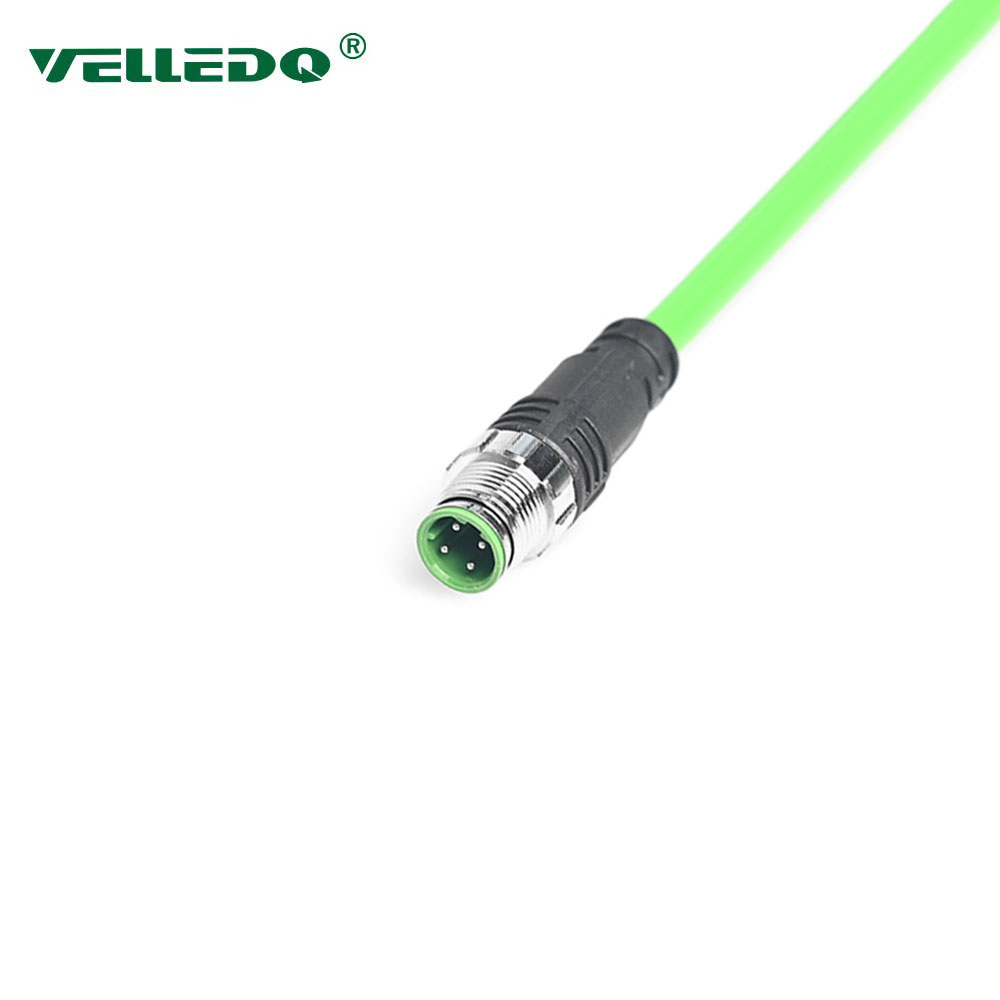

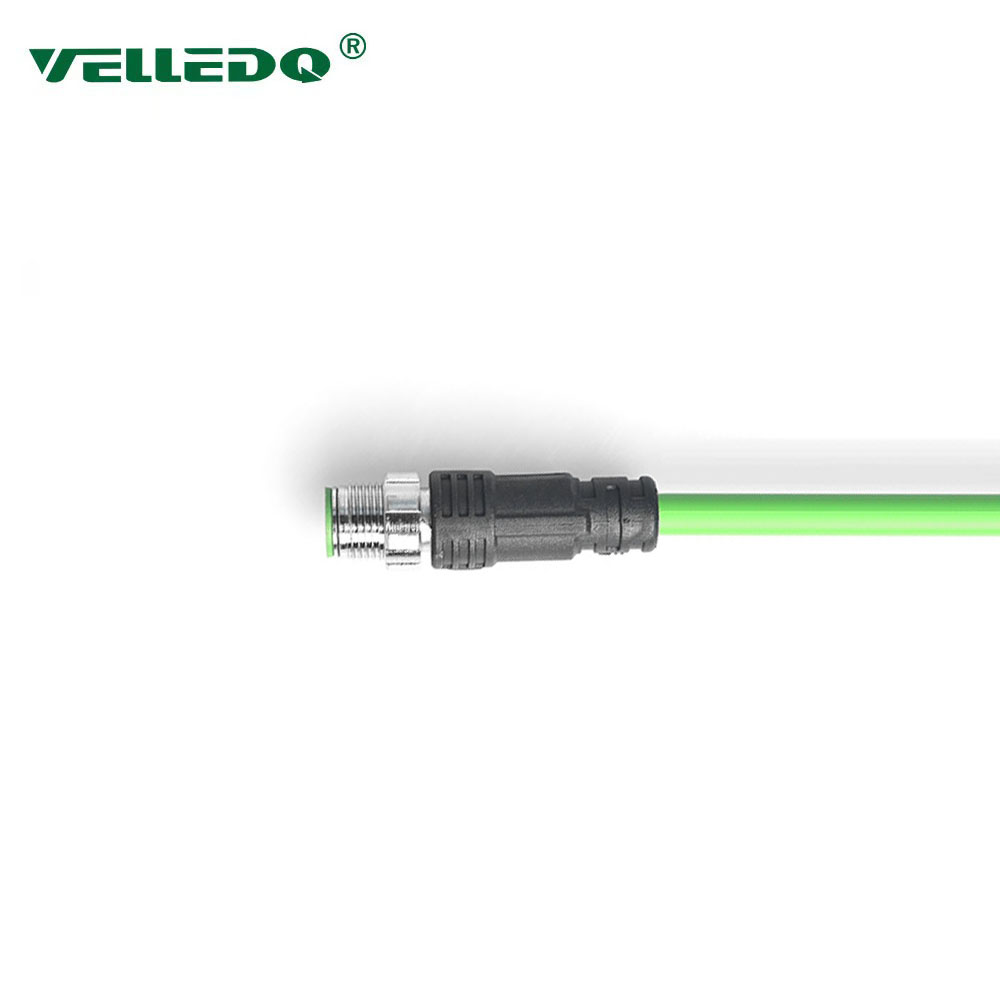

Wind power generation has emerged as a leading source of renewable energy, contributing significantly to global efforts to combat climate change. With its rapid growth and evolving technology, the wind power industry continually seeks innovative solutions to improve efficiency, reliability, and safety. One such advancement is the application of M12 D-coded cables, which play a pivotal role in facilitating seamless connectivity within wind turbines and their associated systems.
Wind power generation harnesses the kinetic energy of the wind to produce electricity. It has gained widespread recognition as a sustainable and clean energy source, offering numerous advantages over fossil fuels. Wind turbines are installed on land or offshore, where the wind’s force turns their blades, thereby generating electricity through an integrated system. This renewable energy form has experienced remarkable growth worldwide, with increasing investments and advancements in technology.To maximize the potential of wind power generation, it is essential to ensure efficient connectivity within wind turbines and their associated systems. Reliable data transmission, control signals, and power distribution are crucial for safe and optimized operation. This is where M12 D-coded cable come into play.
1.The application of M12 D-coded cables in power transmission within wind power generation is critical for the efficient and reliable operation of wind turbines. These cables are used to connect various components involved in power generation, such as generators, transformers, converters, and distribution systems.

M12 D-coded cables are designed to handle the high current-carrying capacity required in wind turbine applications. They are capable of efficiently transmitting electrical power, minimizing power losses and optimizing the overall system efficiency. These cables ensure uninterrupted power flow even in challenging environmental conditions commonly encountered in wind turbine installations.One of the key advantages of M12 D-coded cables in power transmission is their ability to withstand temperature fluctuations, moisture, and vibrations. Wind turbines are often subjected to extreme weather conditions, and the cables used in these systems must be able to endure such harsh environments. The rugged construction of M12 D-coded cables ensures their durability and reliability, contributing to the long-term performance of the wind turbine.
Furthermore, the standardized M12 connector design of these cables simplifies installation, maintenance, and upgrades. This standardized connectivity allows for easy interconnection between different components within the wind turbine system. It promotes compatibility and interoperability, making it easier to integrate various power transmission elements and facilitating faster installation and troubleshooting processes.
M12 D-coded cables play a vital role in power transmission within wind power generation. Their high current-carrying capacity, and ability to withstand bad environmental conditions make them an ideal choice for connecting generators, transformers, converters, and distribution systems. With their standardized design, these cables ensure efficient and reliable power transmission, contributing to the overall performance and sustainability of wind turbine systems.
2.The application of M12 D-coded cables in control and communication systems is of utmost importance in wind power generation. Wind turbines require precise control and monitoring to optimize their performance and ensure safe operation. M12 D-coded cables are utilized to establish reliable connectivity between sensors, actuators, control units, and the central monitoring system.
In wind power generation, M12 D-coded cables enable seamless transmission of control signals, facilitating real-time monitoring and adjustments. These cables ensure that commands and control signals are accurately and promptly transmitted between different components within the wind turbine system. This enables operators to remotely monitor and adjust various parameters, such as rotor speed, blade pitch, and generator output, to maximize power generation efficiency.
Moreover, M12 D-coded cables contribute to the communication network within wind turbines. They facilitate data exchange between different sensors, actuators, and control systems. For example, wind speed sensors, temperature sensors, and vibration sensors provide crucial data for optimal turbine performance and safety. M12 D-coded cables connect these sensors to the central monitoring system, enabling real-time data collection and analysis. This data-driven approach allows operators to make informed decisions, identify potential issues, and implement preventive maintenance strategies.
The reliability and robustness of M12 D-coded cables are vital in control and communication applications. These cables are designed to withstand harsh environmental conditions, including temperature variations, moisture, and vibrations. Their sturdy construction ensures secure connections, minimizing the risk of signal loss or interference. Additionally, M12 D-coded cables feature effective shielding against electromagnetic interference (EMI) and electromagnetic compatibility (EMC), ensuring optimal signal integrity and minimizing the impact of external electrical noise.
Overall, M12 D-coded cables play a critical role in control and communication systems within wind power generation. Their ability to facilitate seamless control signal transmission, reliable data exchange, and resistance to harsh environments ensures the efficient and safe operation of wind turbines. By enabling real-time monitoring and control, M12 D-coded cables contribute to maximizing power generation efficiency and enhancing the overall performance and reliability of wind turbine systems.
3.The application of M12 D-coded cables in sensor networks is instrumental in optimizing the performance and maintenance of wind power generation systems. Wind turbines incorporate various sensors to measure critical parameters such as wind speed, temperature, vibration, and position. M12 D-coded cables are utilized to connect these sensors to the central monitoring and control system, enabling accurate and reliable data transmission.
M12 D-coded cables provide robust and secure connectivity, ensuring that sensor data is effectively transmitted to the central monitoring system. By facilitating seamless communication between sensors and the monitoring system, these cables enable real-time data collection and analysis. This allows operators to closely monitor the performance of wind turbines, detect any abnormalities, and make informed decisions for maintenance and optimization.

The reliable transmission of sensor data through M12 D-coded cables is crucial for effective condition monitoring and predictive maintenance strategies. With the data collected from various sensors, operators can identify potential issues and take proactive measures to address them. For instance, if vibration sensors detect abnormal levels of vibration in a specific component, it could indicate a potential mechanical failure. Timely intervention based on such data can prevent costly repairs and minimize downtime.
Furthermore, M12 D-coded cables contribute to the overall reliability of the sensor network in wind power generation. Their robust construction and resistance to harsh environmental conditions ensure continuous and accurate data transmission, even in challenging operating environments. Additionally, the standardized M12 connector design of these cables simplifies installation, replacement, and maintenance, reducing downtime and facilitating efficient sensor network management.
M12 D-coded cables play a significant role in sensor networks within wind power generation. By connecting sensors to the central monitoring system, these cables enable real-time data transmission, ensuring accurate and reliable monitoring of critical parameters. The data collected through these cables assists in condition monitoring, predictive maintenance, and optimization of wind turbine performance. The robustness, reliability, and standardized design of M12 D-coded cables make them an essential component in sensor networks, contributing to the overall efficiency and reliability of wind power generation systems.
4.The specific application of M12 D-coded cables in maintenance and repairs is crucial for the efficient operation and upkeep of wind power generation systems. Wind turbines require regular maintenance to ensure optimal performance and occasional repairs to address any issues that may arise. M12 D-coded cables play a significant role in simplifying these processes and minimizing downtime.
One key advantage of M12 D-coded cables in maintenance and repairs is their plug-and-play design. These cables can be easily disconnected and replaced when needed, simplifying the replacement of faulty or damaged cables. This quick and straightforward process reduces the time required for repairs, minimizing downtime and maximizing the availability of the wind turbine.
Additionally, the standardized M12 connector design of these cables ensures compatibility and interoperability. When a cable needs to be replaced during maintenance or repair, operators can easily source a compatible M12 D-coded cable, regardless of the turbine model or manufacturer. This standardized connectivity promotes ease of installation, reduces the likelihood of errors, and enables a smooth and efficient replacement process.
Furthermore, the robust construction of M12 D-coded cables contributes to their suitability for maintenance and repairs in wind power generation. As a result, they are resilient and can continue to function reliably even in challenging operating environments commonly found in wind turbine installations.
Overall, the application of M12 D-coded cables in maintenance and repairs streamlines the process of replacing faulty cables, reduces downtime, and ensures uninterrupted operation of wind power generation systems. Their plug-and-play design, standardized connectivity, and robust construction make them an ideal choice for simplifying maintenance and repair procedures, enhancing the efficiency and reliability of wind turbine maintenance practices.