In the realm of industrial automation, communication is key. To achieve seamless connectivity and efficient data exchange between various devices and systems, a robust and reliable communication protocol is required. One such protocol that has gained widespread adoption in recent years is ProfiNet.ProfiNet, short for Process Field Network, is an open Industrial Ethernet standard that enables real-time communication in industrial automation systems.
Developed and maintained by the Profibus & Profinet International (PI) organization, ProfiNet combines the advantages of traditional fieldbus systems with the flexibility and speed of Ethernet networks.ProfiNet is designed to cater to the diverse communication needs of modern industrial environments. It allows for the integration of various devices, including programmable logic controllers (PLCs), human-machine interfaces (HMIs), drives, sensors, and other industrial equipment, into a single network. This unified network architecture enhances interoperability, simplifies system configuration, and improves overall productivity.One crucial element of a ProfiNet network is the ProfiNet cable, which forms the physical foundation for data transmission.
One of the notable features of ProfiNet is its support for real-time communication. With deterministic and synchronized data exchange, ProfiNet enables precise control and synchronization of devices and processes. This capability is crucial in applications where timing is critical, such as robotics, motion control, and distributed control systems.ProfiNet supports different transmission speeds, ranging from 10 Mbps to 100 Gbps, allowing users to choose the appropriate bandwidth for their specific requirements. It can operate over various physical media, including copper, fiber optic cables, and wireless connections, providing flexibility in network design and implementation.

Furthermore, ProfiNet leverages standard Ethernet technologies, such as TCP/IP and UDP/IP, which enables seamless integration with existing IT infrastructure. This integration allows for transparent communication between the industrial automation layer and higher-level systems, such as manufacturing execution systems (MES) and enterprise resource planning (ERP) systems. By bridging the gap between the shop floor and the enterprise, ProfiNet facilitates data exchange, remote monitoring, and diagnostics, leading to improved decision-making and operational efficiency.
Another noteworthy aspect of ProfiNet is its support for both real-time and non-real-time communication. While real-time communication ensures precise control and synchronization, non-real-time communication caters to less time-critical tasks, such as configuration, parameterization, and diagnostics. This versatility makes ProfiNet a comprehensive solution for a wide range of industrial applications.ProfiNet’s openness and compatibility with various vendors’ devices have contributed to its widespread adoption in industries worldwide.
The ProfiNet specification is publicly available, allowing manufacturers to develop compliant devices and systems. Additionally, PI certifies ProfiNet products, ensuring interoperability and compliance with the standard.In conclusion, ProfiNet has revolutionized industrial communication by combining the benefits of traditional fieldbus systems with the power of Ethernet networks. Its support for real-time and non-real-time communication, scalability, and seamless integration with existing IT infrastructure make it a versatile and future-proof choice for industrial automation applications. With its ability to enhance interoperability, increase productivity, and improve decision-making, ProfiNet is poised to play a crucial role in the continued advancement of Industry 4.0 and the Industrial Internet of Things (IIoT).
ProfiNet cable is cables specifically designed for ProfiNet to establish physical connections between various devices and systems within the ProfiNet network. They play a vital role in facilitating the transmission of data and control signals between components such as programmable logic controllers (PLCS), human machine interfaces (Hmis), industrial sensors, drivers and other networking devices. These cables are designed to meet the specific requirements of industrial environments where factors such as anti-interference, reliability and durability are critical.
ProfiNet cable is typically constructed using high-quality materials that ensure optimal performance and longevity. The cable structure consists of multiple layers, each serving a distinct purpose to enable efficient data transmission and protection against external interferences. Let’s explore the key components of a ProfiNet cable:
1.Conductors: The conductors are the core of the cable, responsible for carrying electrical signals. ProfiNet cable often feature twisted pairs of copper wires, which help minimize electromagnetic interference (EMI) and crosstalk between adjacent pairs. The number of pairs can vary depending on the specific cable type and application requirements.
2.Shielding: To safeguard the cable from external electromagnetic disturbances, ProfiNet cable incorporate shielding. This shielding layer, usually made of a metallic material like aluminum foil or braided copper, forms a barrier that prevents interference from affecting the signal quality. Shielding plays a crucial role in maintaining signal integrity and reducing the risk of communication errors.
3.Insulation: Insulation materials surround the conductors, providing electrical insulation and preventing short circuits. Common insulation materials include polyethylene (PE) and polyvinyl chloride (PVC). The choice of insulation material depends on factors such as operating temperature, flexibility requirements, and compatibility with industrial regulations and standards.
4.Jacket: The outermost layer of the cable is the jacket, which protects the cable from mechanical stress, moisture, and other environmental factors. The jacket material is typically a robust and flame-resistant compound like polyurethane (PUR) or thermoplastic elastomer (TPE). These materials ensure the cable’s longevity and resistance to poor industrial conditions.
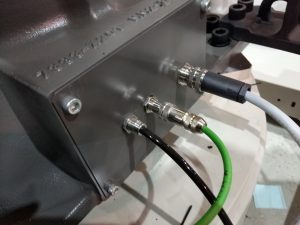
Types of ProfiNet Cable
ProfiNet cable come in various types to accommodate different communication requirements and environmental conditions. Here are some common ProfiNet cable types:
1.Copper-Based Cables: Copper-based cables utilize twisted pairs of copper conductors and are suitable for short to medium-distance communication within an industrial facility. They offer reliable and cost-effective data transmission and are commonly used for ProfiNet applications with lower bandwidth requirements.
2.Fiber Optic Cables: Fiber optic cables employ strands of glass or plastic fibers to transmit data as pulses of light. They provide high-speed and long-distance communication capabilities, making them ideal for ProfiNet applications that require large bandwidths and extended reach. Fiber optic cables offer immunity to electromagnetic interference, making them suitable for environments with high levels of electrical noise.
3.Hybrid Cables: Hybrid cables combine both copper and fiber optic elements within a single cable. These cables offer the advantages of both copper and fiber optics, enabling seamless integration of different devices and systems within a ProfiNet network. Hybrid cables are particularly useful in scenarios where devices in different locations require different transmission media.
Capabilities and Benefits
ProfiNet cable offer several key capabilities and benefits that make them a preferred choice for industrial communication. Let’s explore some of these advantages:
- High-Speed Data Transmission: ProfiNet cable, whether copper-based or fiber optic, provide fast and reliable data transmission rates, enabling real-time control and synchronization in industrial automation applications. With ProfiNet’s ability to support transmission speeds ranging from 10 Mbps to 100 Gbps, these cables ensure efficient communication even in bandwidth-intensive scenarios.
- Noise Immunity: The shielding present in ProfiNet cable provides excellent noise immunity, protecting the transmitted signals from external electromagnetic disturbances. This characteristic is vital in industrial environments where electrical noise from machinery, power cables, or adjacent systems can compromise signal integrity and accuracy.
- Scalability and Flexibility: ProfiNet cable offer scalability, allowing for easy expansion and integration of new devices or systems into an existing network. The availability of various cable types, including copper-based, fiber optic, and hybrid cables, ensures flexibility in designing and deploying ProfiNet networks tailored to specific application requirements.
- Durability and Reliability: Industrial environments can be poor, subjecting cables to mechanical stress, temperature variations, moisture, and exposure to chemicals. ProfiNet cable is designed to withstand these challenges, incorporating robust materials and protective jackets to ensure long-lasting performance and reliability.
- Interoperability: ProfiNet protocol cables adhere to standard specifications set by Profibus & Profinet International (PI), ensuring interoperability between devices from different manufacturers. This compatibility simplifies network configuration, integration, and maintenance, allowing users to choose best-in-class components while ensuring seamless communication within the network.
ProfiNet cable form the backbone of industrial communication, enabling efficient and reliable data exchange in ProfiNet networks. Their composition, design, and capabilities make them a vital component in industrial automation systems, facilitating real-time control, synchronization, and integration of diverse devices and systems. With their noise immunity, scalability, and compatibility with various transmission media, ProfiNet cable contribute to enhanced productivity, streamlined operations, and optimized decision-making in today’s advanced industrial environments. As the industrial landscape continues to evolve, ProfiNet cable will remain a fundamental element in the pursuit of seamless and efficient industrial communication.