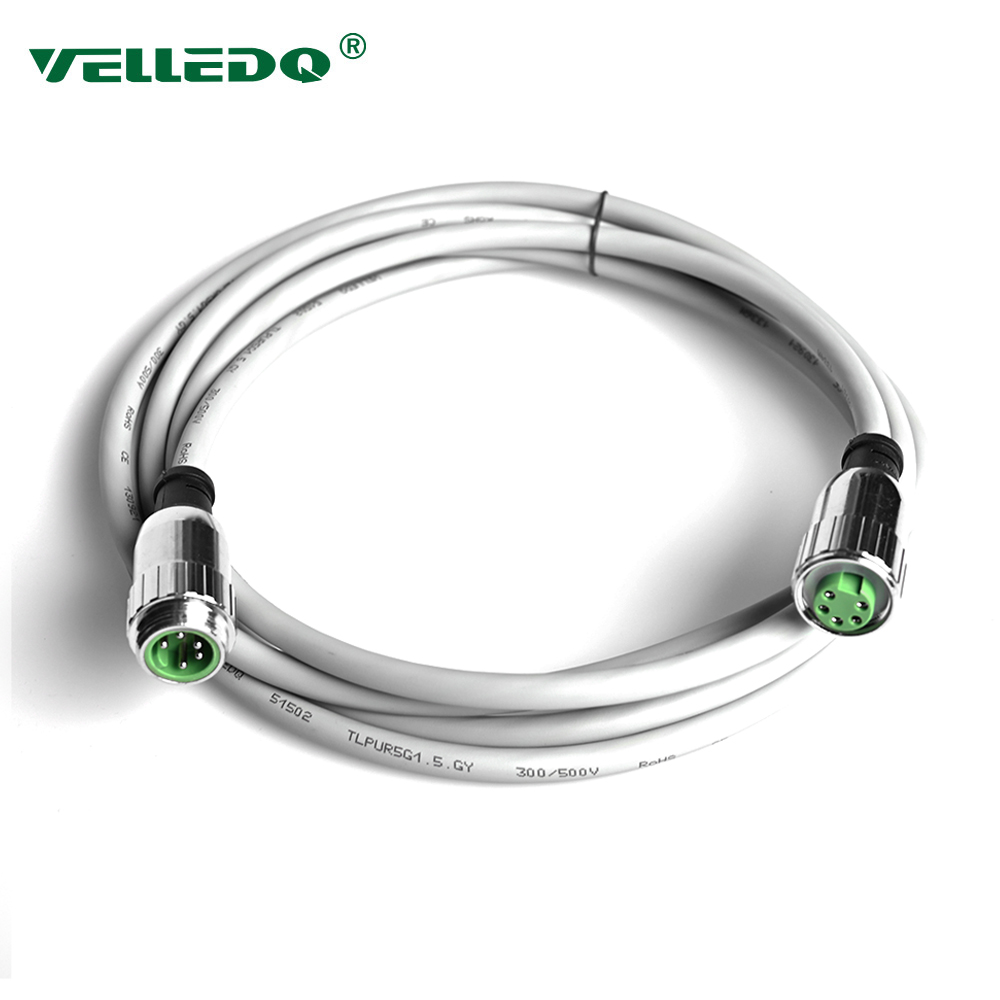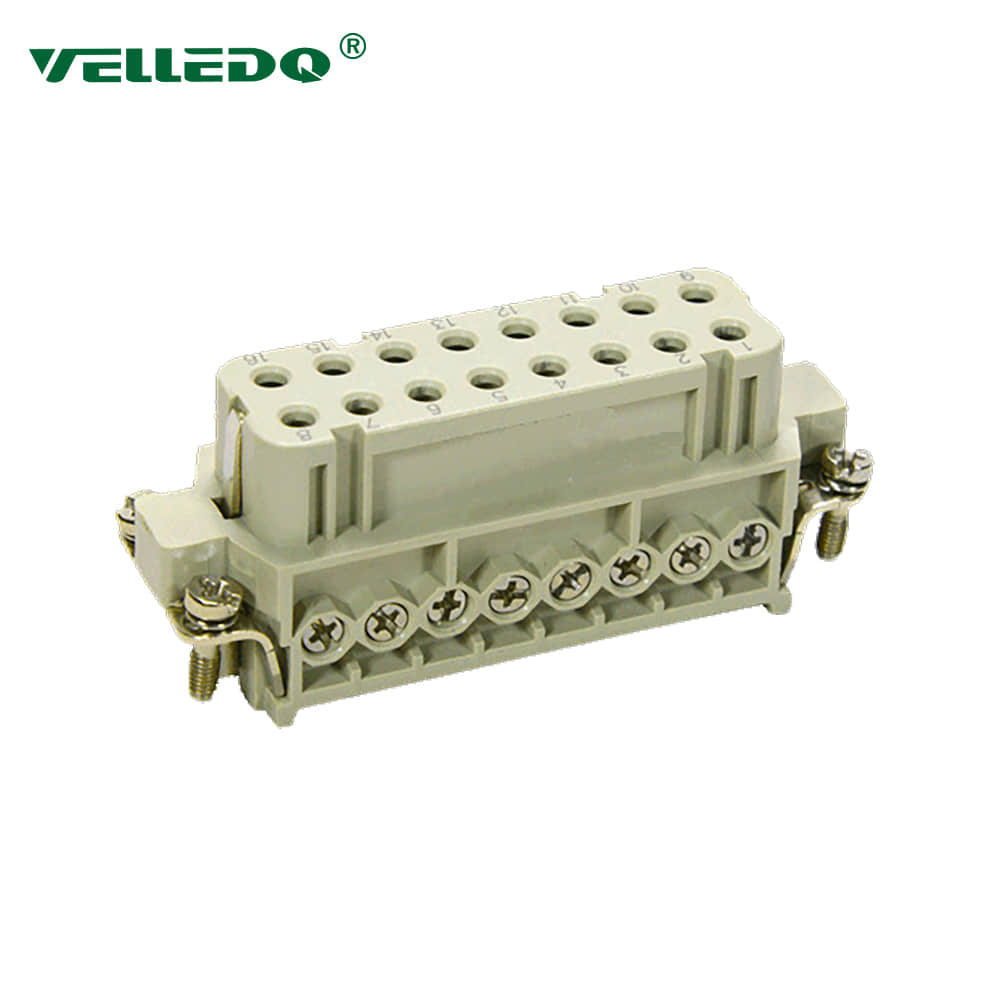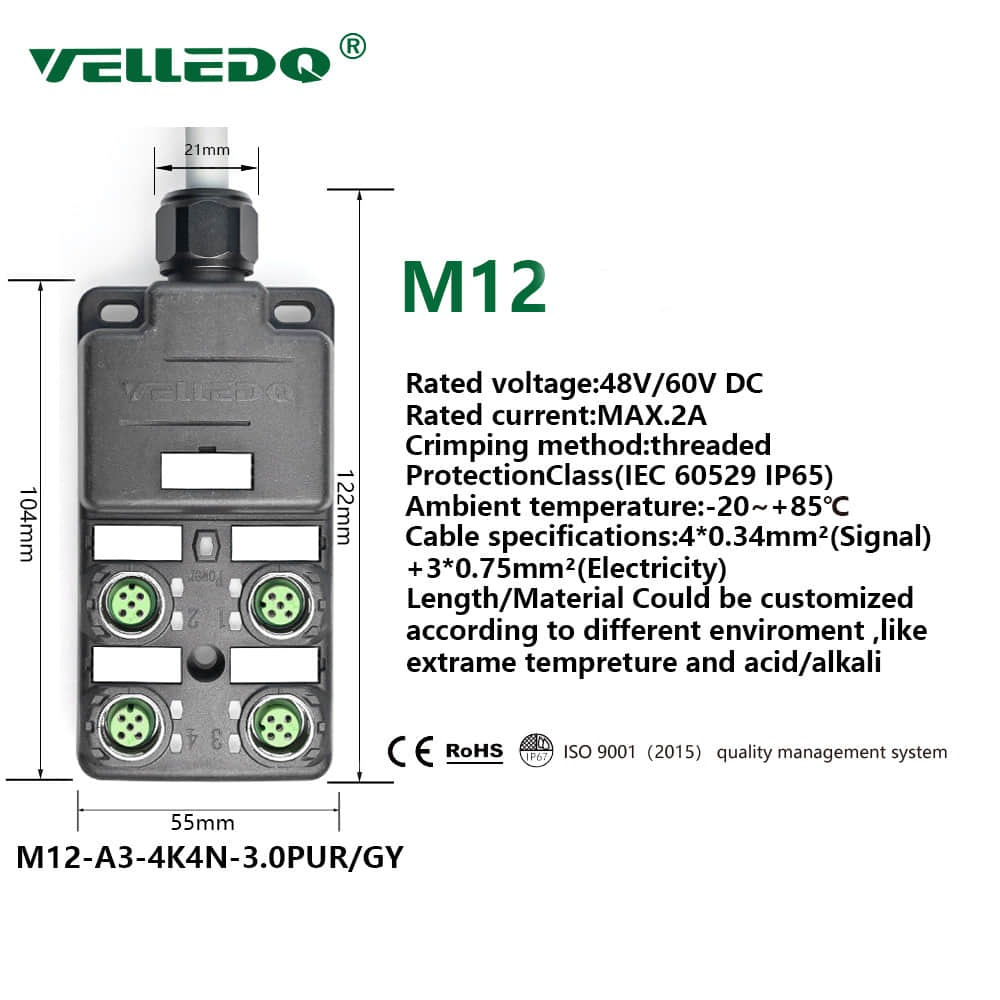


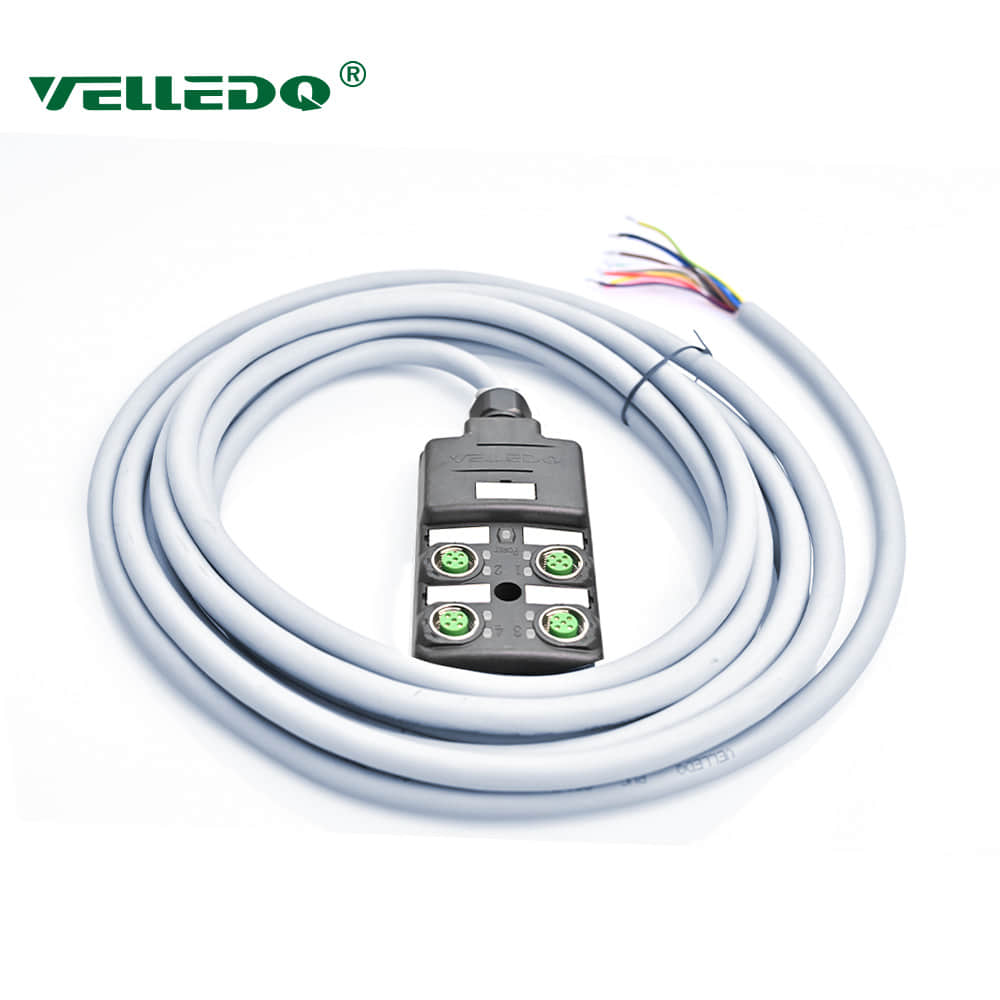
The Junction Block is the terminal of the distribution cable or optical cable, connects the distribution cable or optical cable and the user line part, branches the main trunk line, and has an important role. The distribution box can be installed in the narrow space of the bridge frame, box, pipeline, cable trench, etc., does not occupy the effective use area of the building, convenient installation, and does not need to cut the main cable.
Generally speaking, a Junction Block consists of the following parts:
1. Power access inlet. The Junction Block is to convert a power signal into multiple outputs, so the first condition is to be able to access a power supply.
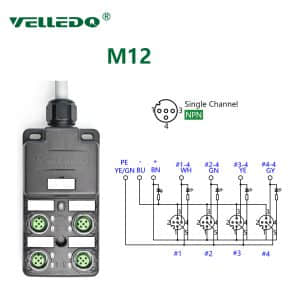
2. Cable. The plug of this cable is a general power plug, which is used to connect the external power supply.
3. Output port. This port is used to output power. Other devices that need power are plugged into this port.
4. LED indicator. Indicates whether the power supply is connected.
5. The shell. Materials may vary according to the needs of different industrial applications. Such as requirements for explosion-proof, waterproof and other properties.
The specification of the Junction Block is optional within a certain range. Can be customized according to their needs.
Power access style: can be selected on the top or side of the distribution box.
Cable specifications: PUR cable (standard), M8 plug, M12 plug, M16 connector, M12 plug, M23 plug
Cable length: generally 5 meters to 10 meters, there are special needs can also be customized length.
Number of ports: Usually in pairs, such as 4 ports, 6 ports, 8 ports, 10 ports
Output line configuration: 5-pin / 3-wire interface, 5-pin / 4-wire connection, 5-pin / 5-wire connector, 3-pin single I/O port, 4-pin dual I/O port
Housing: Standard housing, explosion-proof housing.
The junction block is generally divided into two categories according to its use, one is the power junction box used to connect the power supply, in general, the industrial junction box we say refers to this category; The other is a communication junction box used to connect communication signals, which is usually the network junction box, telephone junction box, network cable junction block and so on.
The junction block is a type of industrial connector. The distribution block is a device that can output multiple current or data signals through the shunt conversion of an access power supply or data. Then, in general, the M8, M12 junction block we say refers to the junction box with the line jack of M8 or M12 specifications. The difference between it and the ordinary socket is that the power output of the ordinary socket is only positive and negative two levels, or there is a ground wire, and the power output of the industrial distribution box is a pin I/O port.
Type specification of the distribution block.
1. Type
According to the different connection methods can be divided into two categories: crimp type and clamp type. According to the different installation methods can be divided into hanging and embedded two.
2. Specifications
Junction block products according to its capacity can be divided into 5, 10, 20, 30, 50, 100 lines and other specifications.
Performance requirements of the distribution box
Electrical performance of the distribution box
(1) Insulation resistance of juction block
① Under the standard atmospheric conditions of the test, the insulation resistance between any two ends and between any terminal and the metal box body should not be less than 5×10⁴MΩ.
② After the condition test, the insulation resistance between any end and any terminal and the metal box body should not be less than 5×10³MΩ.
(2) Contact resistance of the Junction block
① Under the standard atmospheric conditions of the test, the contact resistance between the wire and the terminal should not be greater than 5×10⁻³Ω.
② After the conditional test, the increase in the contact resistance between the wire and the terminal should not be greater than 3×10⁻³Ω.
(3) electrical strength
① Under the standard atmospheric conditions of the test, when the RMS AC value of 500V is borne between any two terminals or between any terminal and the metal box body, there should be no breakdown and flashover phenomenon within 1min.
② After the conditional test, when the RMS AC value of 500V is borne between any two terminals or between any terminal and the metal box body, there should be no breakdown and flare-up phenomenon within 30s.
Physical properties of the junction block
(1) The plastic body of the indoor junction block and various connecting devices should be made of flame-retardant materials.
(2) The box cover opens flexibly, and the opening Angle should not be less than 100° to ensure that it does not affect the continuous operation.
(3) The installation foot of the hanging junction block should have sufficient impact strength.
(4) When the box cover is closed, its sealing performance should meet the requirements of IP43 specified in GB2408.
(5) The soldering part of the terminal should be uniformly hung, and its length should not be less than 5mm.
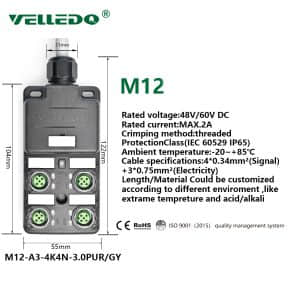
Installation method of distribution box
1. Installation of various outdoor junction block.
(1) Mostly for rail installation, (using metal back).
(2) Installation of wall type outdoor junction block..
2. Install the indoor cable distribution device
(1) Installation of wall type indoor junction block.
① The installation height of the junction block installed on the wall of the corridor is above the painting mirror line or the bottom of the box is 2500mm away from the floor.
② The distribution box installed on the indoor wall can be installed above the kicker line, and the bottom of the box is 50mm away from the kicker line.
(3) The junction block installed in the cable rising room should be installed vertically, and the lower part is 1500mm away from the floor.
④ The installation of the wall indoor junction block adopts lead tenon and wood screws.
3. The installation of the niche type cable junction block is divided into two parts: box installation and box connecting parts installation.
① The box installation shall be carried out by the building construction department according to the design requirements.
② The lower edge of the box is 1000 ~ 1300mm from the floor, and the corner of the box is ≥1000mm.
③ The length of the cable tube entering the box shall not be greater than 15mm. The pipe mouth is blunted and hinged, and then the pipe is connected to the box with a nut.
④ Connecting parts inside the box include cable boards and templates. The modules should be installed in the middle of the box.
Easy to achieve clear field wiring. The junction block bundles several cables into one main cable to connect to the controller. The distribution box is equipped with a status indicator, and the user can observe the signal status at any time.
Connecting the distribution cable or optical cable and the user line part, branching the main trunk, has an important role. The junction block can be installed in the narrow space of the bridge frame, box, pipeline, cable trench, etc., does not occupy the effective use area of the building, convenient installation, and does not need to cut the main cable.
Junction Block advantage
First, easy installation, operation and maintenance
The field instrument is connected in parallel, the terminal joint check workload is greatly reduced, the wiring is simple, and a cable can usually connect 20 devices. Bus junction block devices can simulate input values, output values, or states. This allows the operator control room to test the system’s response to faults and process conditions. The bus junction box can store useful information for maintenance, and the information is not lost. A large amount of useful information is also stored in automated devices, which can be obtained from both handheld terminals and operating stations.
Second, database consistency
The junction block uses a fully decentralized database concept. Any man-machine interface with the multi-interface junction box can display the relevant information, so that there is no duplicate, inconsistent database. The central hub uses only one database, that is, the database scattered in the field instrument, and the human-machine interface obtains “calibration data” from this database, and the handheld terminal searches for the same database.