A while ago, there was a widely circulated article titled ‘Hanover Exhibition in Germany: Why is China’s manufacturing marginalized?’ Out of curiosity, as the Hanover Industrial Fair was nearing its conclusion, I visited several exhibition halls in hopes of personally verifying the accuracy of the claim that ‘China’s manufacturing has been marginalized.’
Let’s start with the conclusions:
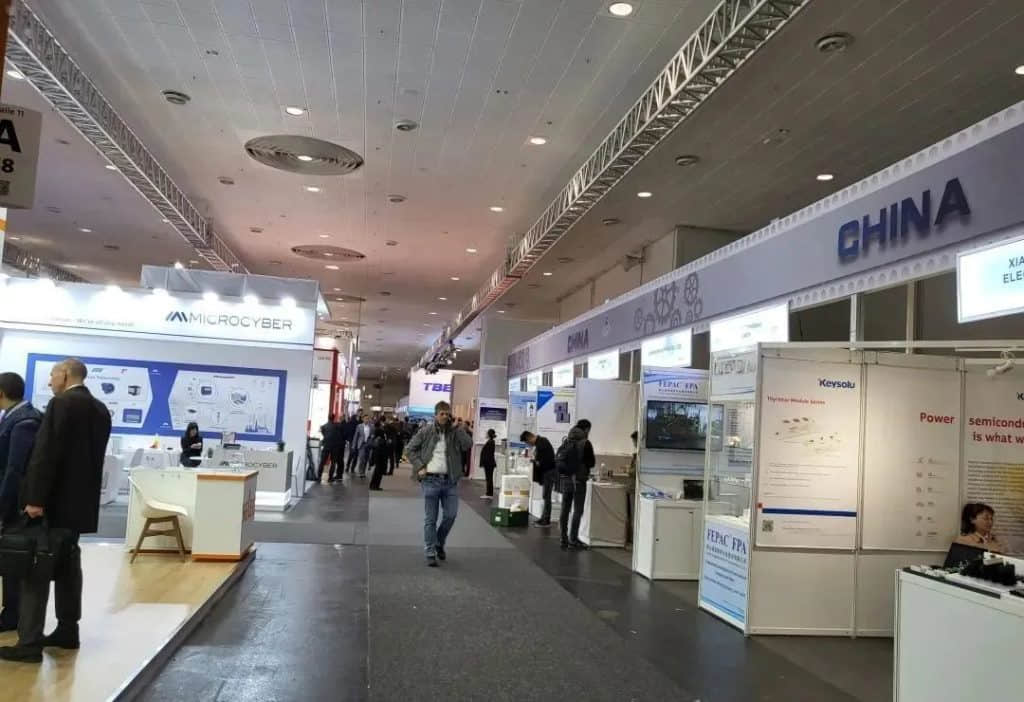
Due to a large number of Chinese exhibitors opting for lower-priced booths located on the outer periphery of the venue, it does indeed give the impression that China’s manufacturing has been marginalized.
Although most Chinese exhibitors were situated on the outskirts of the exhibition halls, their quantity was still significant, and they were present in every hall, indirectly indicating the extensive involvement of Chinese manufacturers.
International counterparts are also making progress, notably manufacturers from Turkey, Poland, and India.
AI technology will have an impact on the global industrial landscape.
About Hannover Messe
It should be said that the professionalism of this exhibition is still good, but the drawback is that the industry focus is not enough. For example, automobile groups participate in auto shows, aviation manufacturers participate in air shows, industrial equipment manufacturers prefer to participate in EMO shows, while those who participate in Hannover Industrial Messe are mostly large comprehensive industrial groups and industry organizations, such as Siemens, ABB, VDMA, Fraunhofer and other “exhibition enthusiasts The Hannover Industrial Messe is mostly attended by large industrial groups and industry organizations, such as Siemens, ABB, VDMA, Fraunhofer and other “exhibitors”, as well as small and medium-sized manufacturers of general industrial products (e.g. switches, cables, motors).
Since the extension of “industry” is almost all-encompassing, this positioning determines that the exhibitors come from various fields of industry, and studying this exhibition is equivalent to a sample survey of industrial enterprises, and the exhibitors from different countries can reflect the industrial status of the country to some extent.
SMEs from China (including Taiwan): cooped up on the periphery
The cost of participating in an exhibition at sea is very high, which is not affordable for general foreign trade enterprises. Therefore, Chinese small and medium-sized manufacturing enterprises mostly choose the standard booths with lower costs. The exhibition booths are generally negotiated between exhibition companies and exhibition organizers to obtain relatively low booth prices and then resell them to Chinese exhibitors to earn the difference in price and exhibition fees.
In this way, Chinese SME exhibitors are inevitably concentrated in the peripheral areas of each exhibition hall, giving people an impression of being “marginalized”. But in fact, Chinese SMEs are in a similar state when they participate in many professional exhibitions overseas. The large number of Chinese exhibitors occupying the edge of each exhibition hall precisely reflects the current situation of Chinese manufacturing: a large number of foreign trade production enterprises have been hovering on the edge of the global manufacturing industry for a long time, generating a large amount of foreign exchange for the government by relying on low profit and high sales, and the entrepreneurs have gained good income by self-exploitation and exploitation of employees. However, due to the low profit margin, once the economic downturn, sales decrease, then corporate losses are probable.
Therefore, for Chinese SMEs, increasing profitability is the most obvious goal.
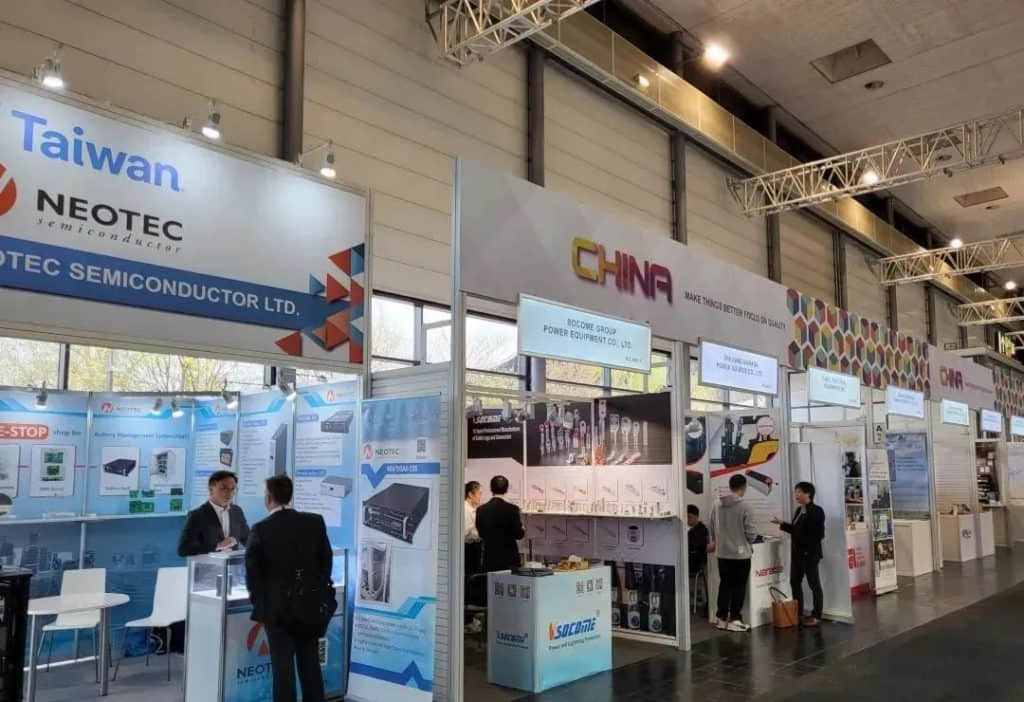
The uniform booth design reminds me of the uniform store signs in Beijing. Does it cost a lot of money to print a company’s logo on the sign hanging above the booth?
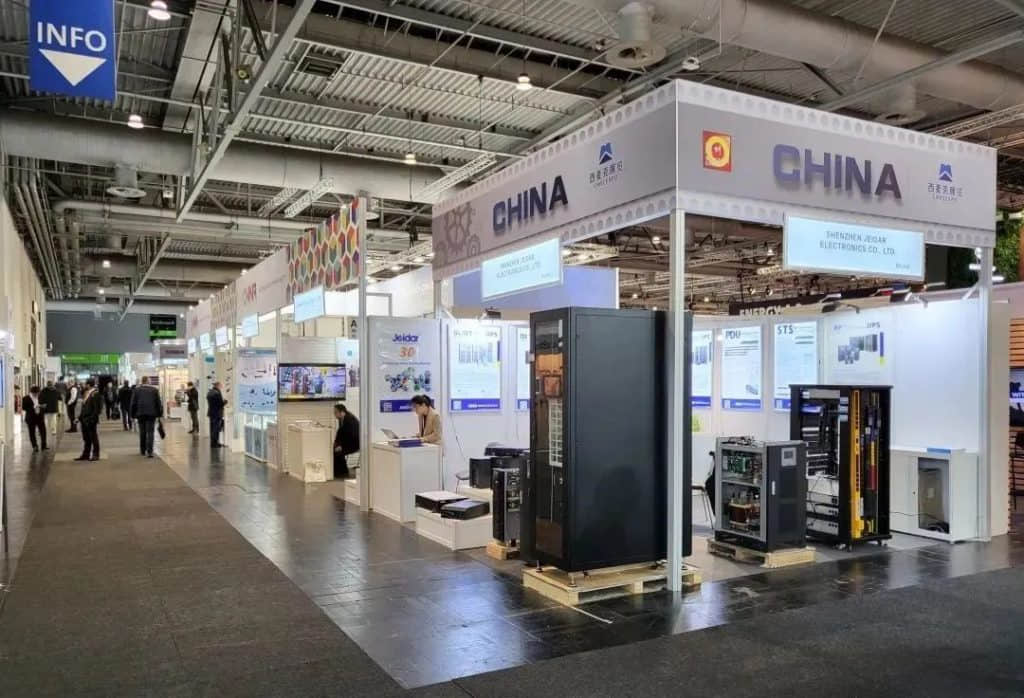
In fact, the number of visitors to the whole exhibition hall was very high, only the fringe was a bit cold. In fact, all exhibitions are overcrowded in the center, and the edges are deserted.
The booths of large state-owned enterprises are usually good and located near the middle of the exhibition hall. This also indirectly shows that SOEs occupy a pivotal position in the global manufacturing sector, and are the center of global manufacturing in many fields.
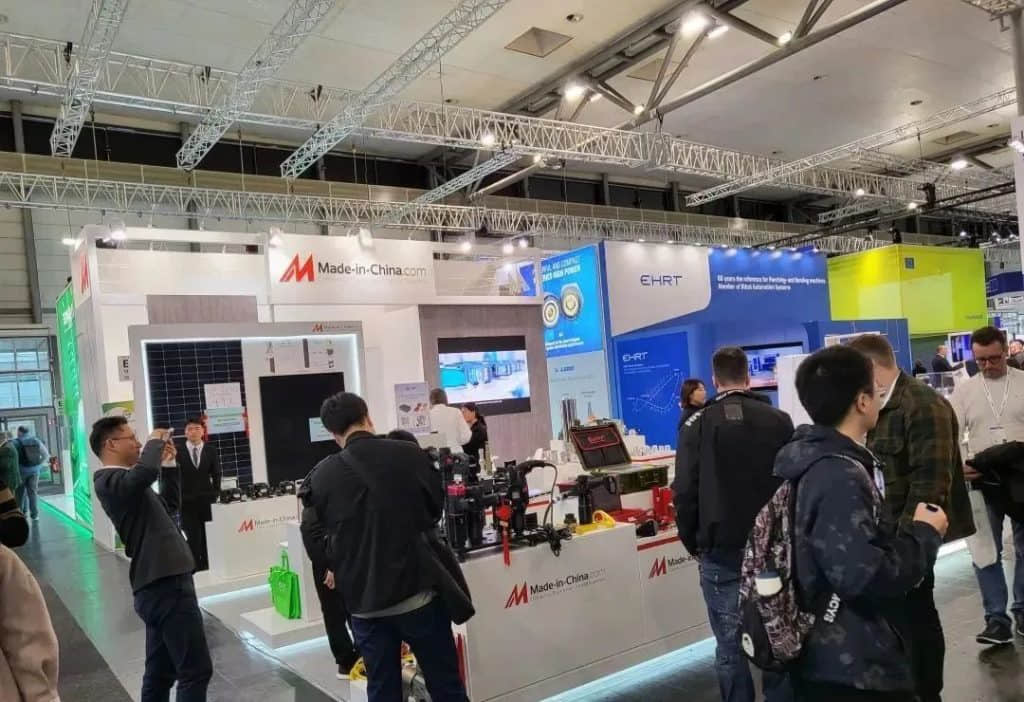
The e-commerce platform is still very good at what it does, and this website had a popular booth that showcased several companies’ products.
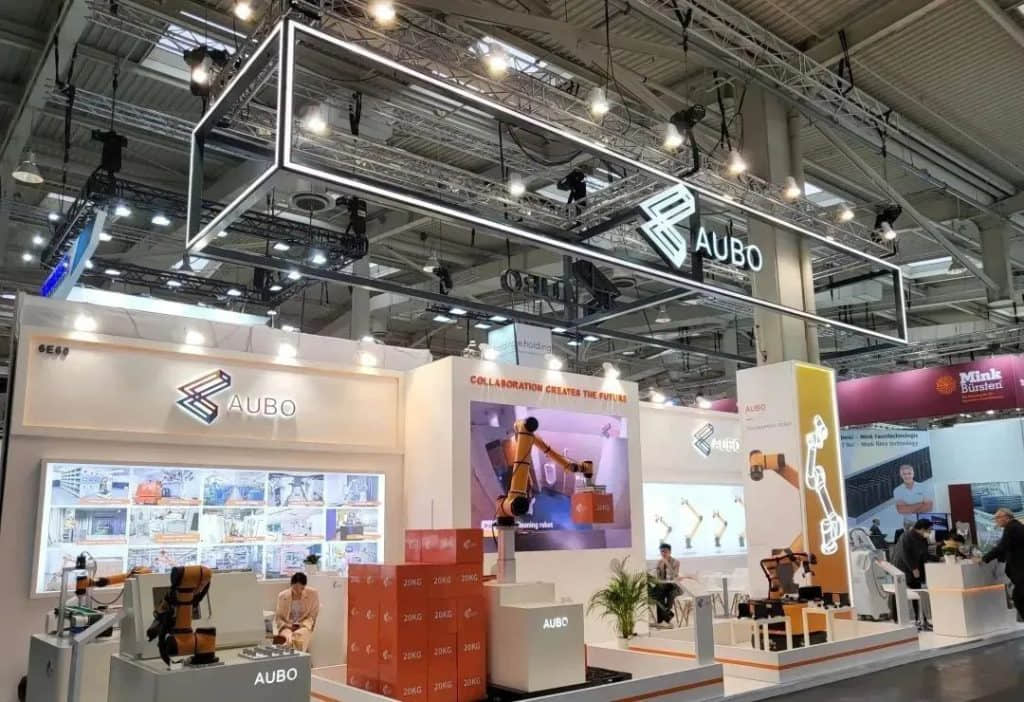
There is another category of Chinese exhibitors that have been fully internationalized and are directly targeting international customers industrial clients. The larger booth this year was Haier, showing CosmoPlat, but no Huawei was seen.
Hannover Messe is a very good sampling system, which can visually reflect the current state of industrial development in each country. Take China as an example: most SMEs are hovering on the edge of global manufacturing, state-owned enterprises have taken center stage, and a small number of private companies are beginning to play an important role in the global value chain.
It is not accurate to say that Chinese manufacturing is being marginalized, but rather that most enterprises are languishing on the periphery, while a small number of enterprises have squeezed their way onto the stage and into the center. At the same time, there are companies from other countries that have sharpened their heads to the center, and they are the real competitors of Made in China.
Eastland enterprises: near the water, fast growth
Here the Eastland refers to Eastern Europe and Turkey, due to the proximity to the developed economies of Western and Northern Europe, so take a large number of high-profit orders and industrial transfer of dividends, rapid development in recent years. Turkey, in particular, is singing the lead in major professional industrial exhibitions.
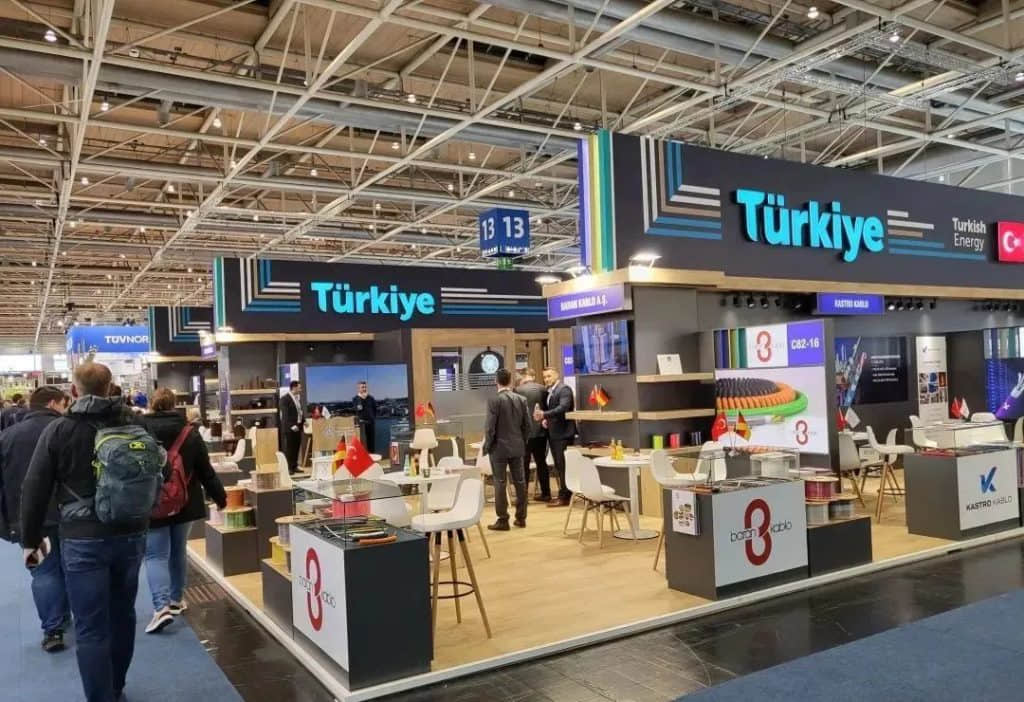
The booths of Turkish manufacturers in each pavilion were closer to the center and had a more crowded appearance. The Turkish booths also have a more modern open design. Usually, coffee, snacks, ice cream, etc. are served by the booth distributors. Both exhibitors and customers can enjoy them.
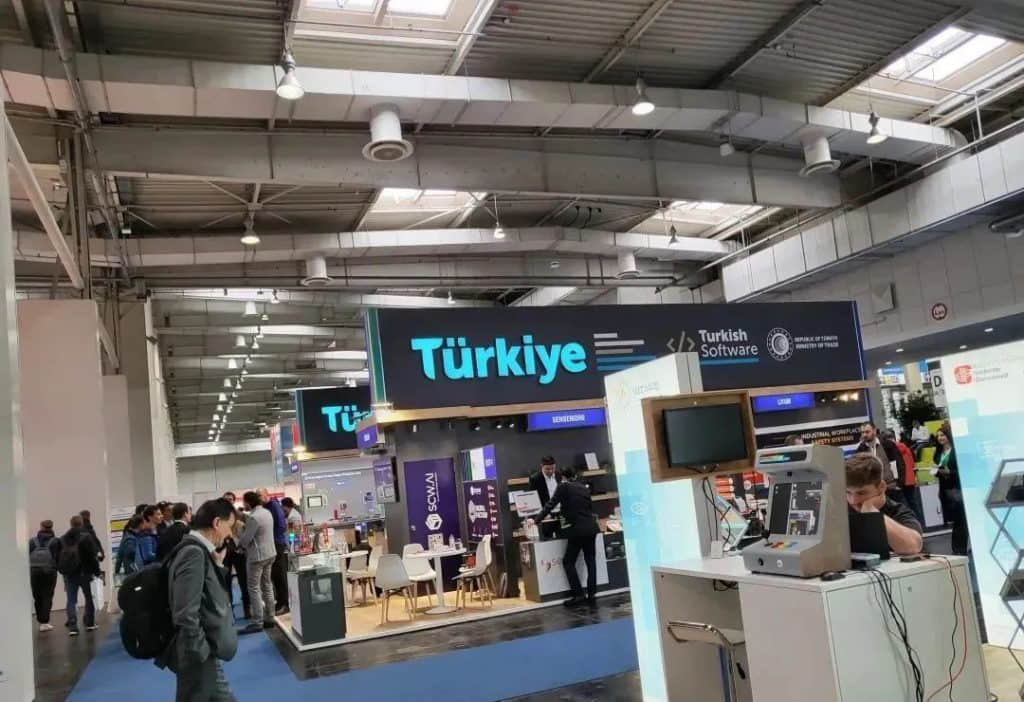
The picture above should be in the software pavilion, the centralized booth in Turkey has a dozen software companies exhibiting collectively (the big companies usually set up independently), and the booth design is the same as No. 13 Hydrogen Tube.
PS, the little brother with the cheek in the bottom right corner is from Augsburg University, and they designed a cyber security training based on the RPG game of gather town (this game was a big hit during the epidemic). This format is very good because IT and production security training in ordinary companies are very boring.
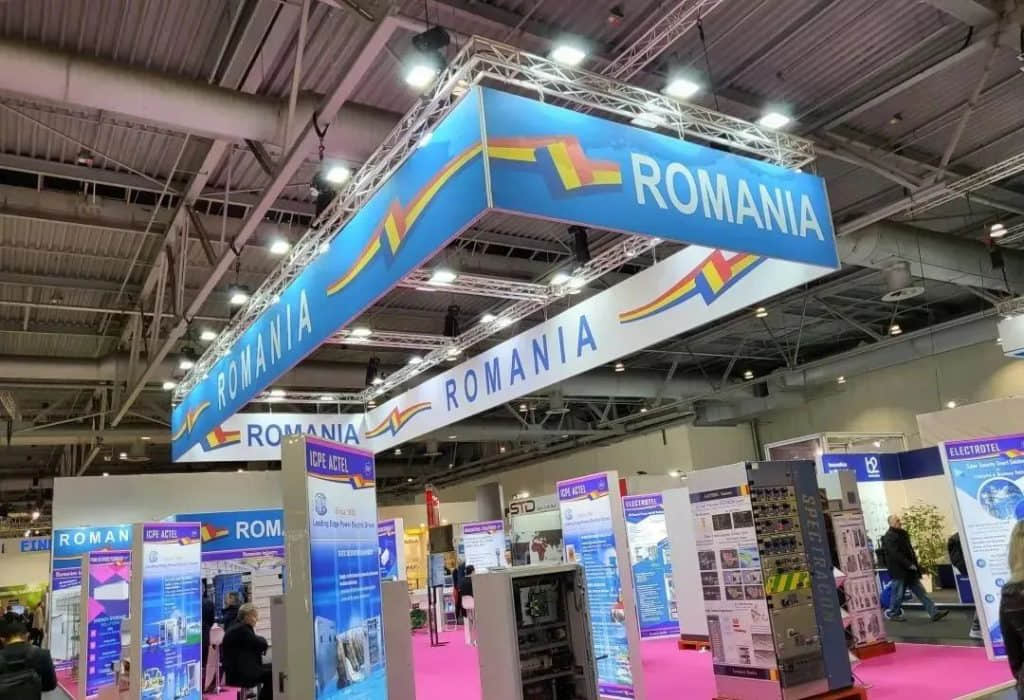
Romania had a booth dedicated to industrial achievements. I met a lot of Romanian, Polish, and Czech businesses from Eastern Europe during the exchange with the exhibitors.
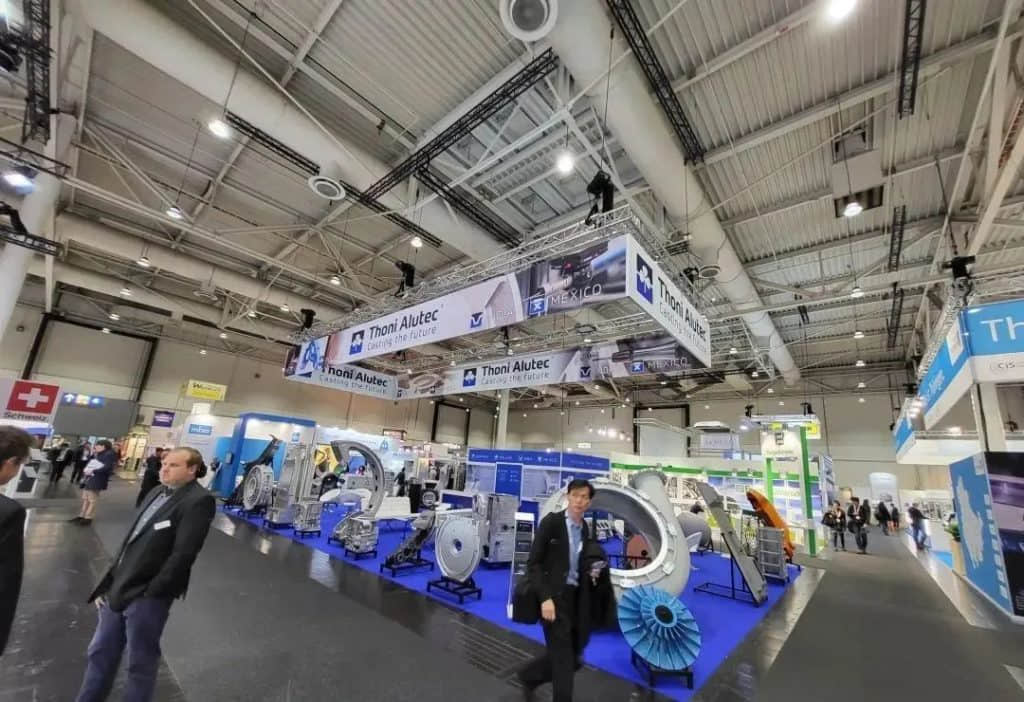
This Thoni Alutec cast aluminum parts manufacturer is from Poland, and you can see this company at another show I follow, Aluminum Düsseldorf. I just went through my previous photos and found that I first learned about this company at the Aluminum Industry Show ’14, and the beautiful casting in the picture below is for the Leopard II tank (the engine is made by MTU).
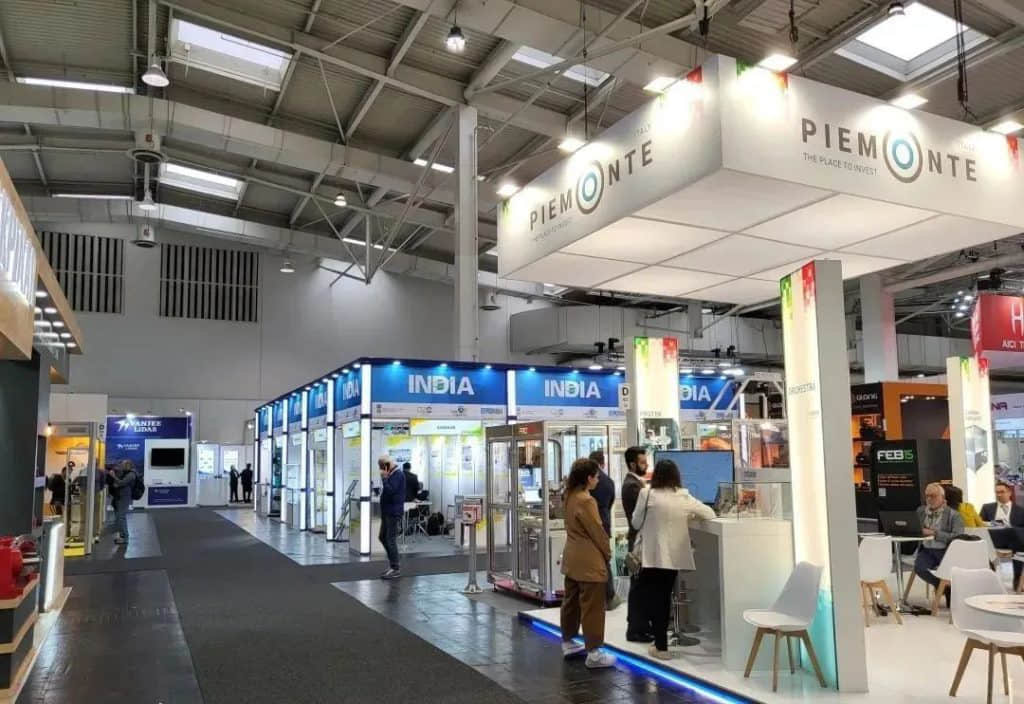
The situation of Indian exhibitors is similar to that of Chinese exhibitors, they are also contracting cheap booths on the fringe, and the number is very large, and the quality of exhibits is getting better, but there are not many big companies with independent booths. This shows the competition between Chinese and Indian manufacturing companies, and at present China has the advantage. But the potential of Indian companies should not be underestimated.
It is worth noting that the strength of Indian software has been very obvious. In the industrial software pavilion chatted with a dozen European software companies, of which about 30% of the chats are Indian. Exhibitors of Indian software companies should also be a lot, but time constraints did not have time to look closely.
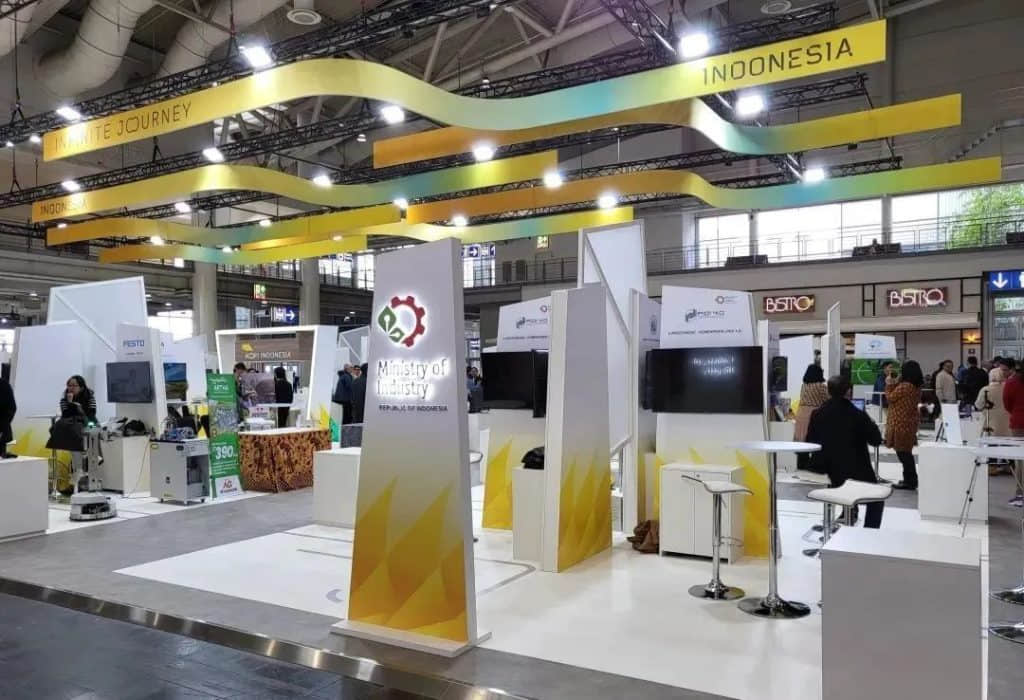
Indonesia was the guest country this year, so the booth was very large and the number of exhibitors was exceptional. Indonesia has also grown up with many technology companies. For example, the above picture of this kind of 3D printing to make prototype samples. Many of them are not low standard. And Indonesia has a considerable advantage in the field of renewable materials and material recycling.
From the results of the “sampling” of exhibitors at the show, China’s position as a manufacturing power is still in place, but by no means unassailable. In the case of sluggish domestic demand, the external market (external recycling) is an important resource for companies to maintain their livelihood.
Made in China is subconsciously making an enemy of the world. This is the biggest constraint on our ability to dominate global manufacturing and industry. We are now giving too much home country sentiment to the manufacturing industry, such as industrial prosperity. For ordinary manufacturing enterprises, the first priority is to make money, to fight for the country to solve the problem of card neck and other things later.
Chinese enterprises overseas can not do big brother, the main problem is that we India, Vietnam, Turkey are seen as competitors; Europe and the United States can become big brother, because they are China, Japan, South Korea are seen as employees or suppliers. Global industry and commerce can be seen as a direct sales system, must continue to develop downline, let the downline for you to make money in order to be able to lie win. If you don’t develop a downline, you will die sooner or later. In the world of developing a downline, the first thing to do is to break the prejudice of “not my people will be different” and establish the right idea of “everyone is equal before money”.
Technology companies “invade” the industrial field
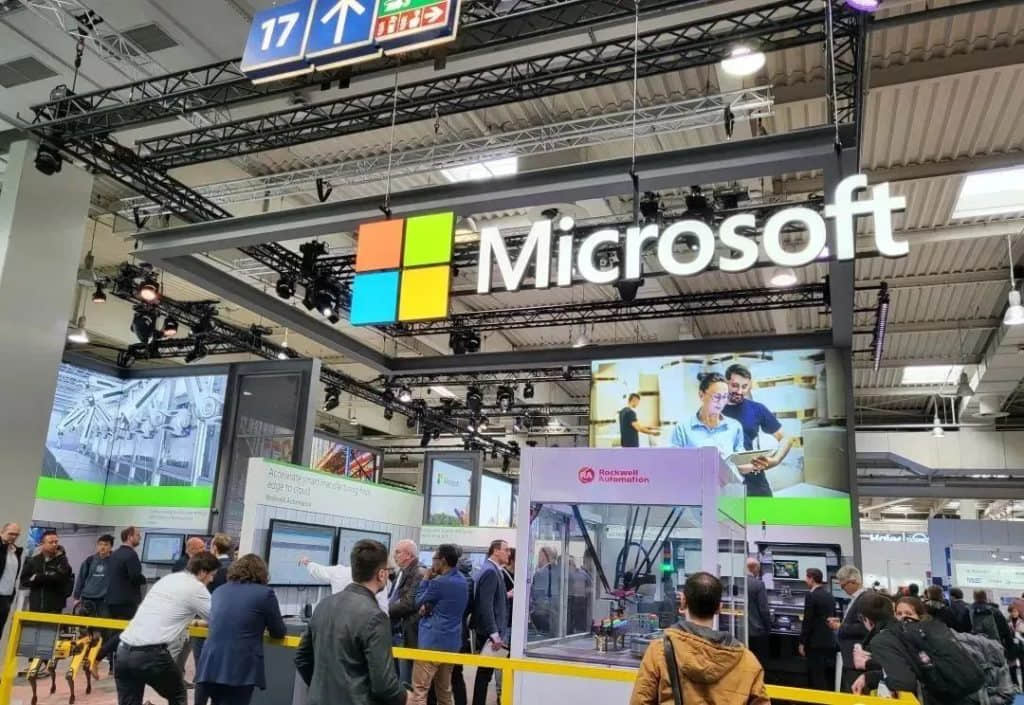
With the support of AI, Microsoft, Google and Amazon’s cloud services have become more powerful, and an industrial APP ecosystem has been formed based on cloud services.
For example, Arumcode, a Japanese CAM software company, has placed its product line on Microsoft’s Azure cloud, offering its customers access to CAM software services through a subscription. 169.99 EUR/month for CAM software usage, plus 129.99 EUR/G for Azure cloud services. For a small machining company, for 300 EUR per month, you can have a CAM software package and program with the power of ChatGPT (the introduction says to write G-code with generative AI).
SAP launched the Hana cloud service database shortly after the Industry 4.0 concept in 2016, which was an industry pioneer at the time, and seven years later the cloud service is blooming and bearing fruit everywhere. The photo above is a live shot of the SAP booth at Hannover Messe 2016.
Google showed several machine vision applications: companies only need to upload quality control images to google cloud and marker out defects, the system will automatically train a quality control model. And the processing speed of online monitoring will be very fast, because the images are running on Google’s cloud server, so the processing speed is much faster than ordinary workstations, so the speed of online monitoring depends on the speed of the network.
Google’s Bard is obviously behind Microsoft’s ChatGPT, but its funded deepMind is likely to pull back the game in graphics processing.
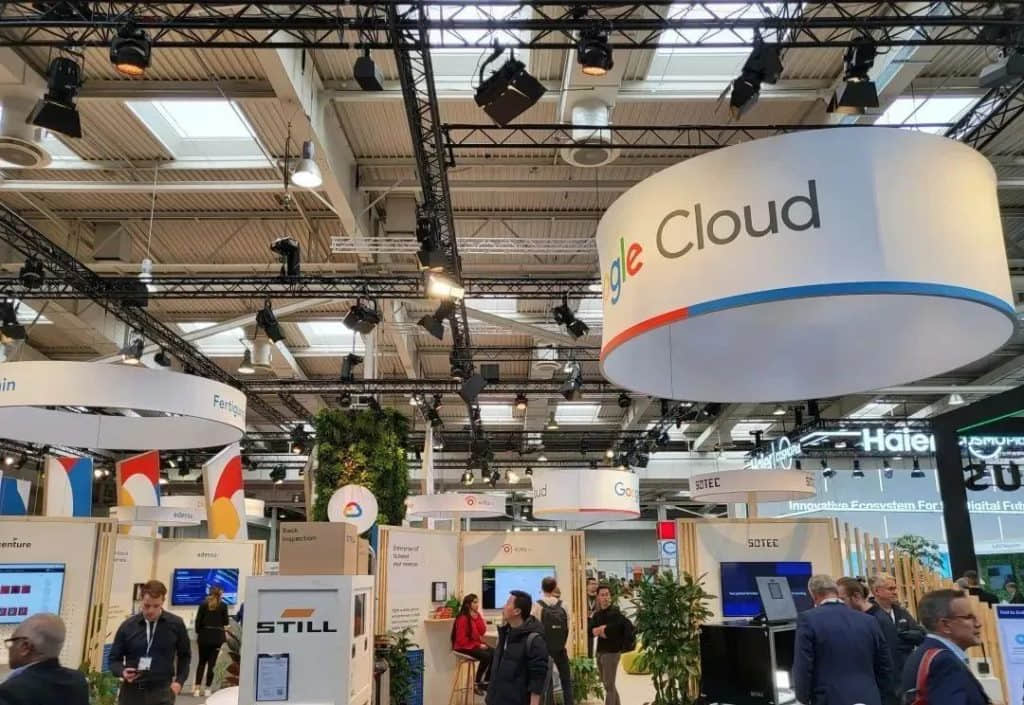
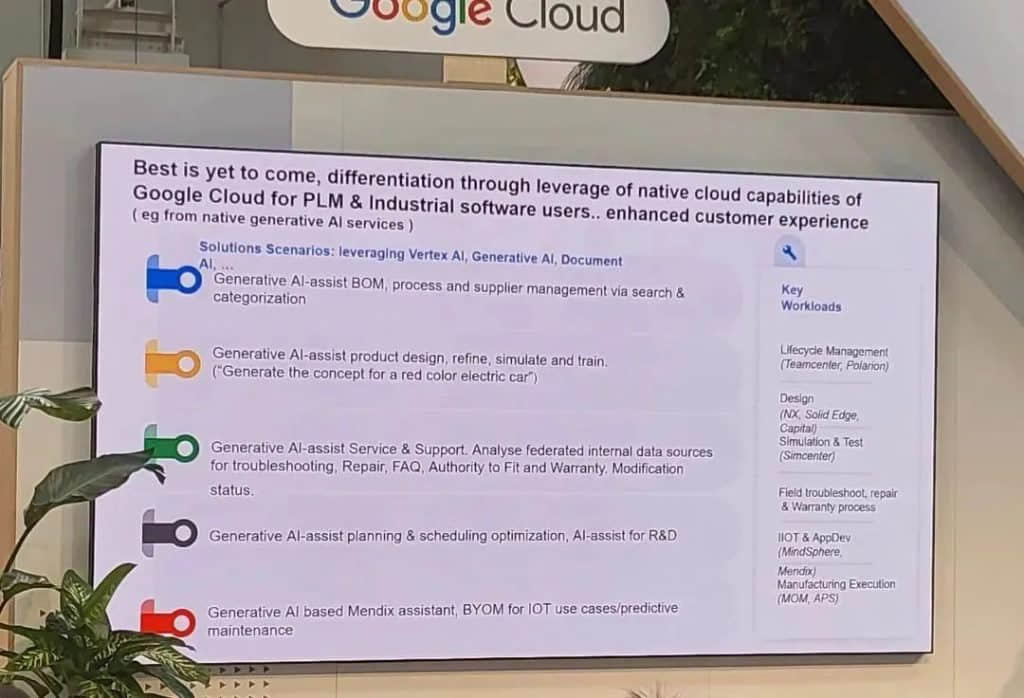
It is also clear from Google’s field report that it is confident in the application of AI in industry, even including product design and simulation.
Amazon is also pushing its own cloud service, and Siemens’ Industrial Meta Universe has a partnership with them.
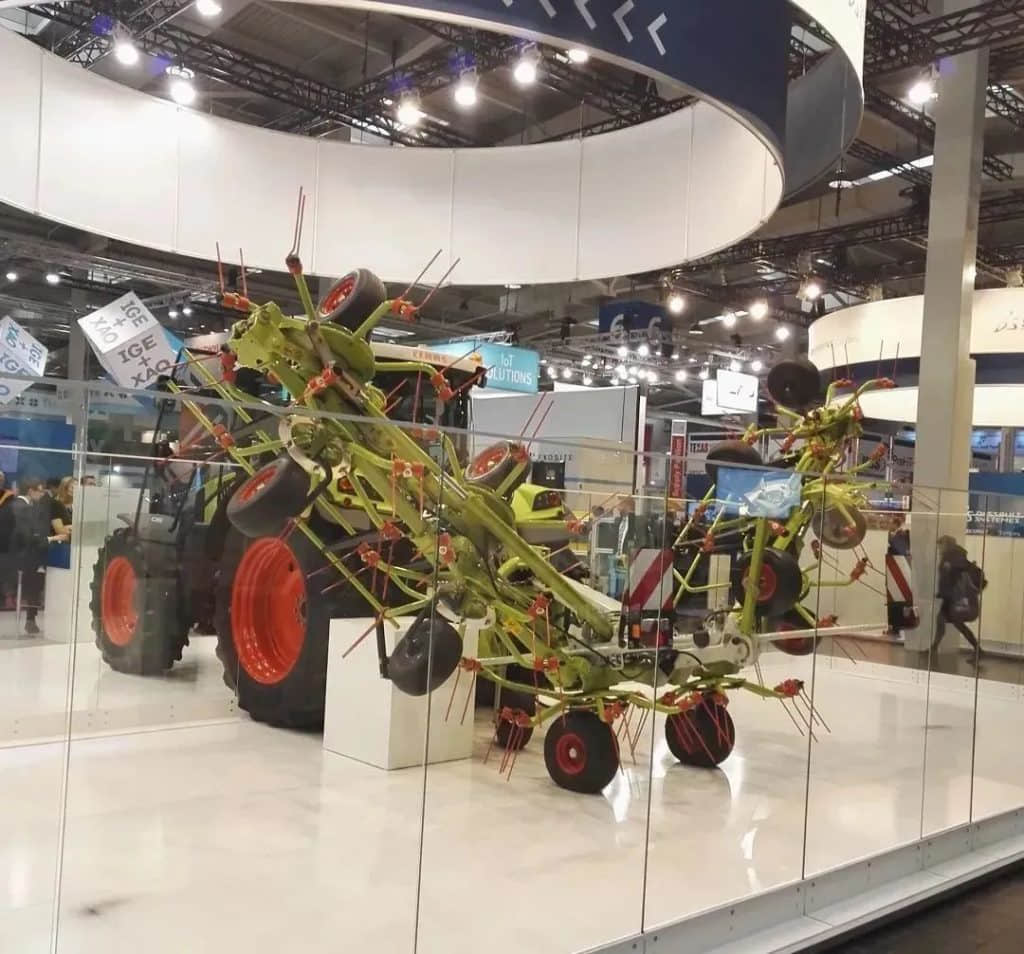
Above is a multifunctional agricultural machine exhibited by Siemens at the 2016 show as a way to promote his digital twin concept. At that time, Siemens acquired several software companies and re-integrated them under several platforms. Time has changed and now Siemens has gone beyond the digital twin and Industry 4.0 to directly build out the industrial meta-universe. I believe AI can also make a big difference in the industrial meta-universe.
In order to use ChatGPT more conveniently, I started to try Google’s Workspace and experience Copilot beforehand. the result is that I can’t quit, and its power is so powerful that traditional software is incomparable. So I started to try various cloud service APPs. I basically use the web version of Excel and Word now, because I can use ChatGPT API-based plug-ins more easily. So cloud service based industrial APP is also easier to use AI plug-ins, I believe this combination of cloud + AI can be a large number of fans in the enterprise.
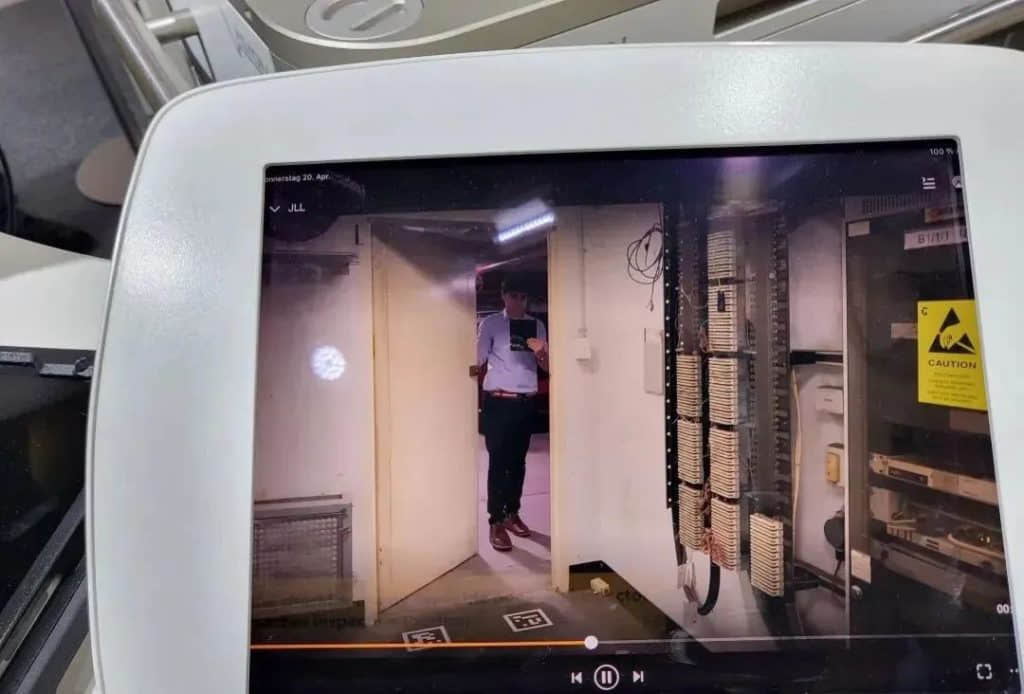
The above case is a “Digital Baby AR” for industrial equipment maintenance based on O2’s 5G network: the user only needs to follow the directions indicated by the arrows on the panel to the specified location and follow the operation procedures step by step to complete the inspection and maintenance of the equipment. As long as the operating instructions are specified in sufficient detail, any novice can be competent.
For businesses, using the panel is enough, no need for AR glasses. So this O2 design is very grounded.
As an O2 user, I spent half a day talking to a development manager at their booth. He finally told me very honestly that he thinks the application scenarios for 5G are actually very limited. Even in the case above, using the factory’s Wifi is enough, and individuals actually have even less immediate need for 5G.
The drive motor for the robot joint below will be the breakout product in the automation field, and Wittenstein has made a big improvement on its latest Galaxie gearbox to develop a second generation product with lower cost and smaller size. This product can then be used in a large number of applications in all kinds of robots and automation products where space is tight. In the field of robotics, the traditional harmonic reducer will be completely replaced by the Galaxie II.
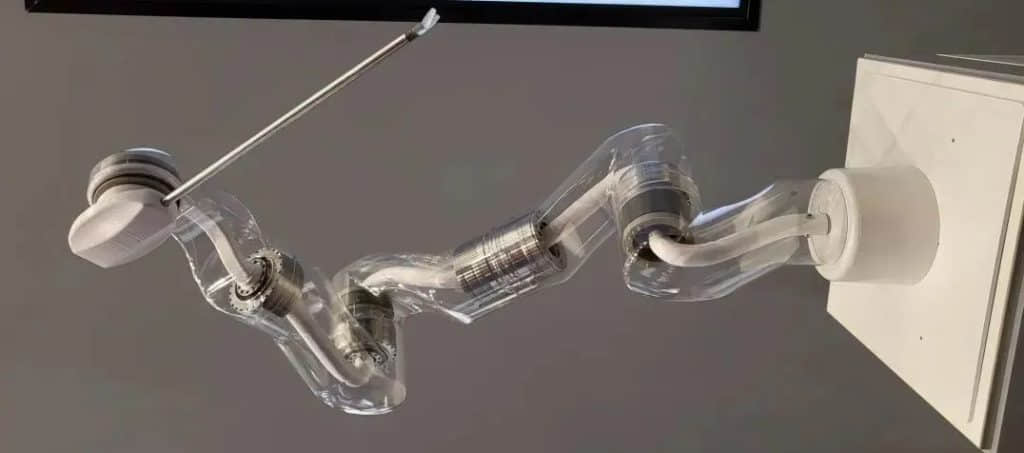
In recent years it always feels like industrial hardware is not keeping up with the speed and pace of software development. Looking over the photos from the 2016 show, I see that the hardware is still steadily evolving. The same simulated robot hand is much more sophisticated now than it was 7 years ago
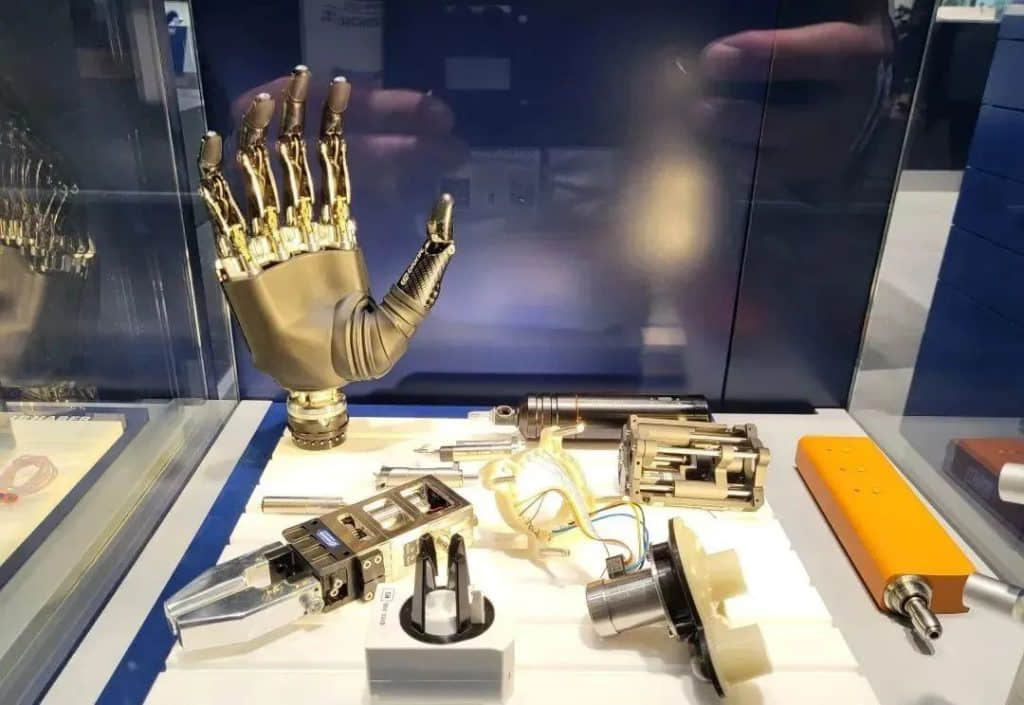
Humanoid robot hand on display in 2023
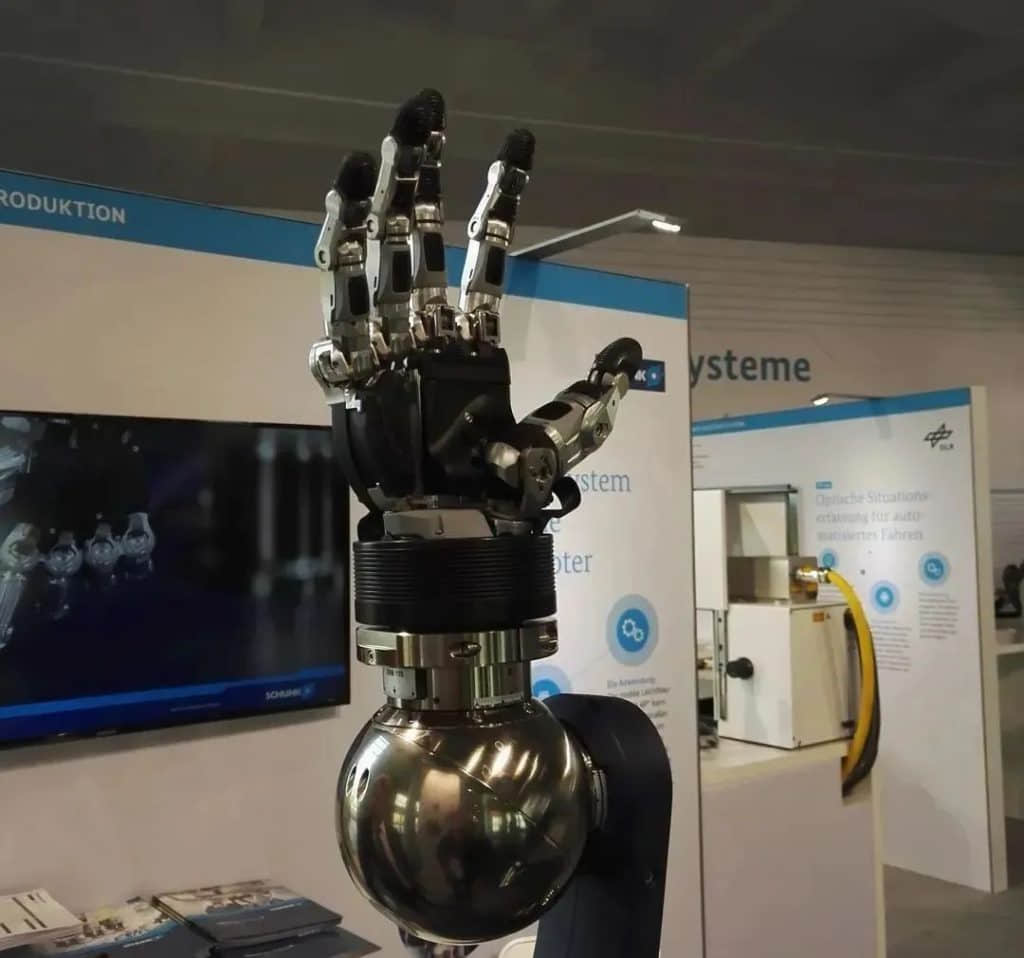
The humanoid robot hand on display in 2016
Although this year’s show is half the size of the previous one, one can feel that many markets are poised for growth, such as intelligent industrial software, hydrogen energy, etc., and Chinese companies should never be absent.