What is IO-Link?
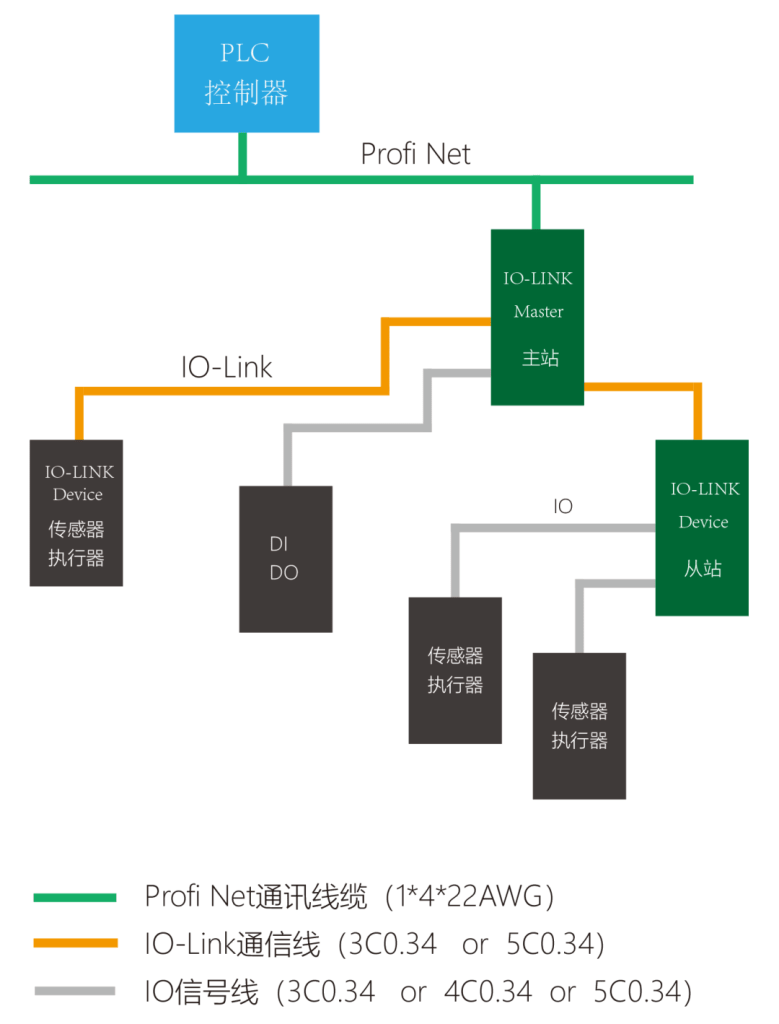
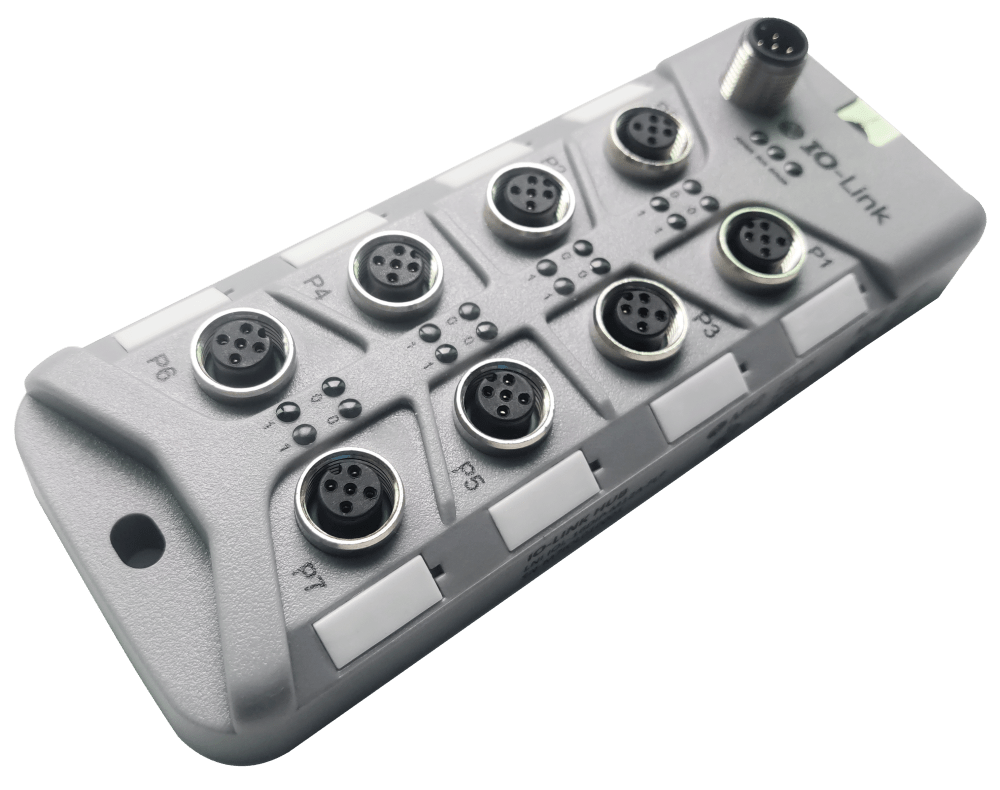
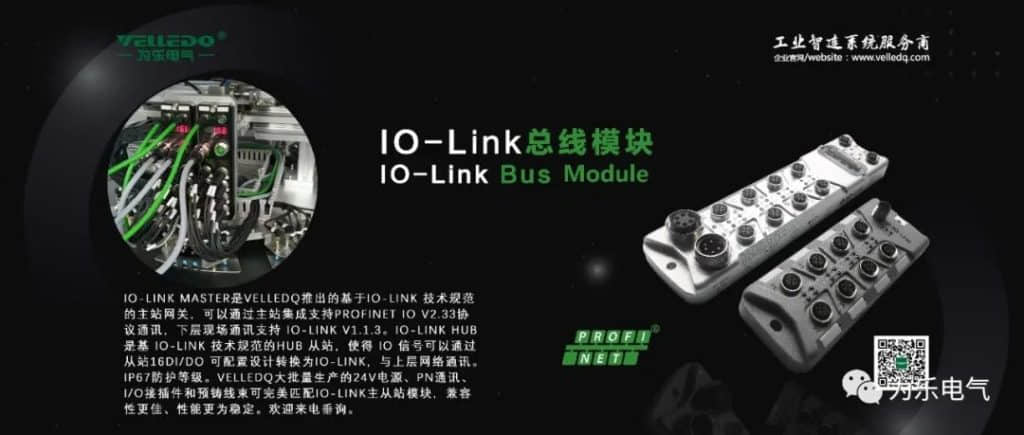
IO-Link Master is VELLE’s master gateway based on IO-Link technology specification, which can support Profinet IOV2.33 protocol communication through master integration, and IO-LinkV1.1.3 for lower level field communication. IO-Link HUB is a HUB slave based on IO-Link technology specification, which makes IO signals can be converted through the slave 16DI/DO configurable design.
VELLE’s mass-produced 24V power supply, PN communication, I/O connectors and pre-cast harnesses are perfectly matched to IO-Link master and slave modules for better compatibility and more stable performance.
IO-Link is a serial digital communication protocol for automation technology. It connects sensors or actuators to a programmable logic controller. IO-Link is not another fieldbus communication protocol, but a point-to-point communication protocol between IO-Link devices and IO-Link masters. A point-to-point connection is a way to connect two independent endpoints or nodes for communication. IO-Link is bi-directional, i.e. it works in two ways and over short distances. This communication method is mainly used in factory or automation engineering to connect sensors and actuators. Using IO-Link, these field devices, such as actuators and sensors, can be connected to an IO-Link master and communicate with a controller, usually a PLC or programmable logic controller. The IO-Link Master establishes communication between the IO-Link Device and the automation system.
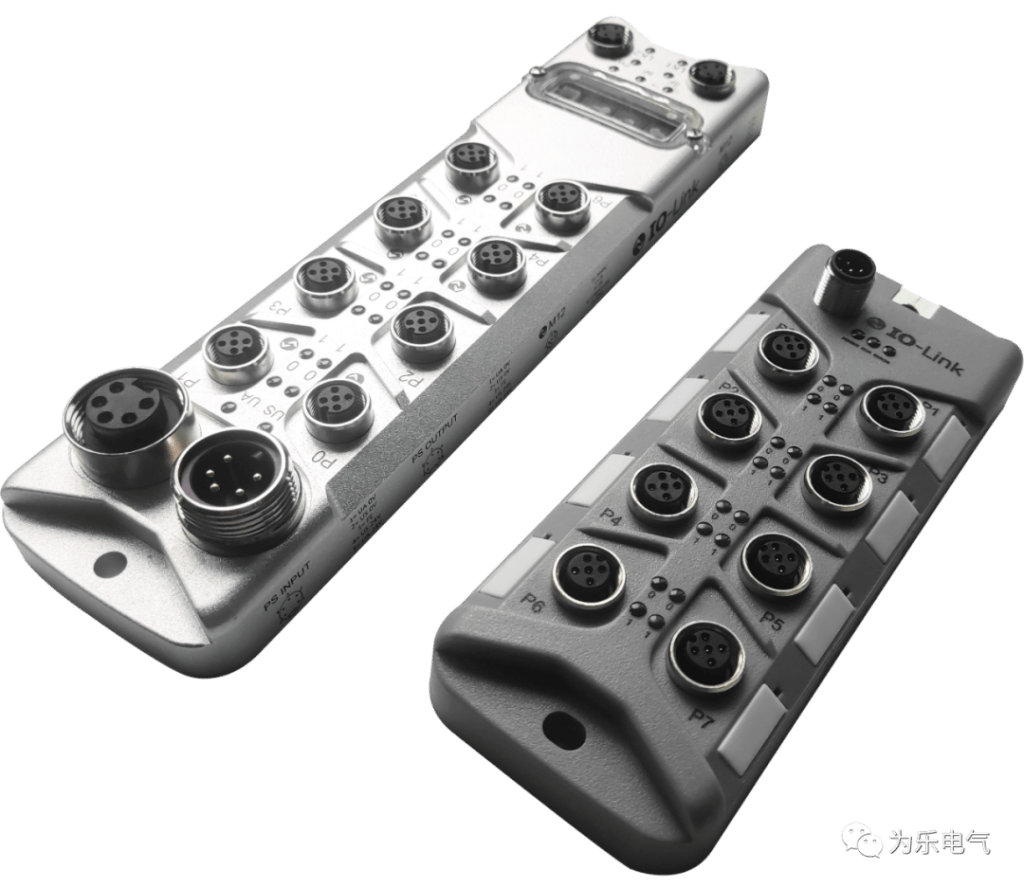
IO-LLink Master
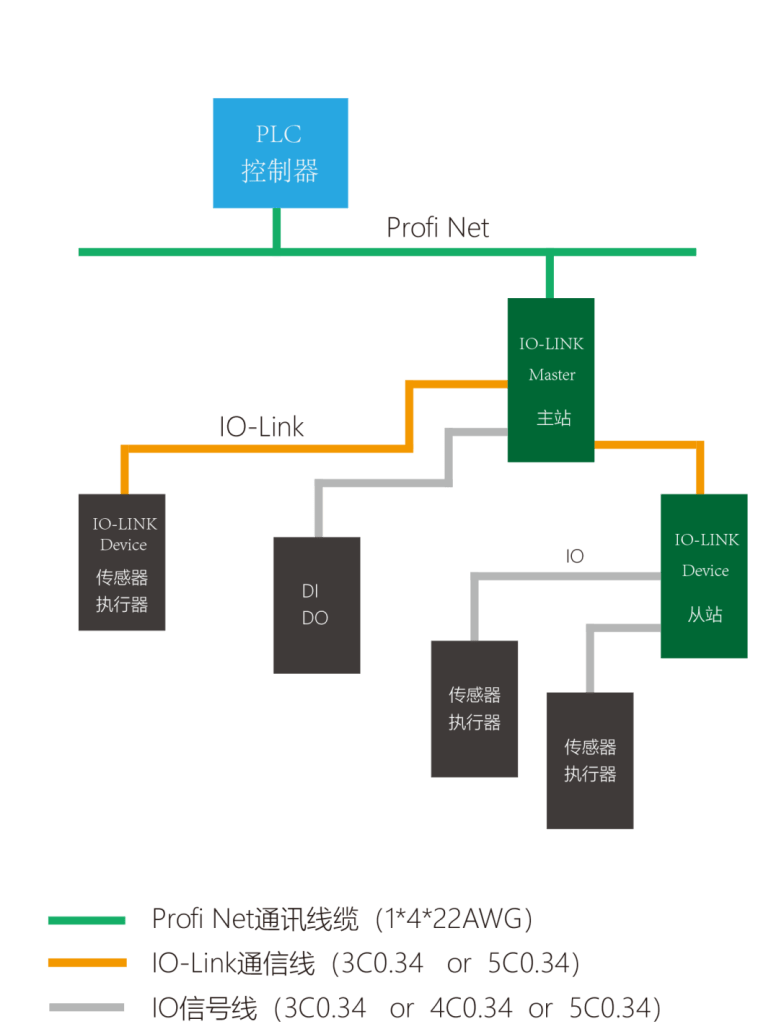
An IO-Link master can have multiple IO-Link ports (channels), and an IO-Link device can be connected to each port, which means that IO-Link is a point-to-point communication rather than a kind of fieldbus. IO-Link protocol specifies an IO-Link port that can be carried out in 4 different modes 1, IO-Link mode: The port is used for IO-Link communication 2, DI mode: the port can work with digital input devices as well 3, DO mode: the port can work with digital output devices as well 4, Inactive mode: the port is not set to any of the modes IO-Link is a very powerful communication system It runs on 24 V power supply There are several reasons that may cause transmission errors, generally cable If the error is recognized, the message will try to be transmitted twice. Only when the message transmission fails for the third time, IO-Link will recognize the transmission error, and when this error is recognized, the IO-Link master will mark the transmission error and send it to the controller (PLC), so that the maintenance personnel on site can pay attention to the problem and intervene to fix the error.
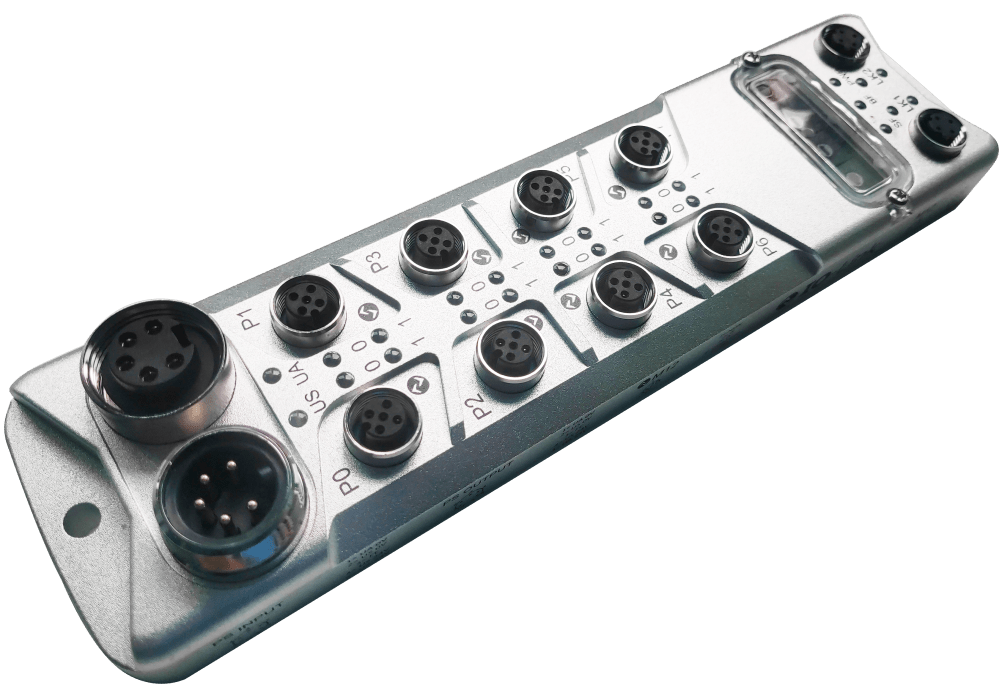
IO-Link Slave
IO-Link devices have four types of transmission: 1. Process data: The latest status of the sensor or actuator: e.g. speed The process data is transmitted automatically at defined intervals, periodically, and up to 32 bits of process data can be processed, as defined by the controller (PLC). 2. 3, Device Information: Contains device definition information, such as serial number, version number and other basic information or more advanced information, such as parameters or diagnostic information, which can be obtained from each IO-Link device. A device can send an event, which in turn sends an event to the IO-Link master. An error or warning message is an event, such as a short circuit or a device overheating, which can be used for displaying parameters or for displaying information on the HMI. This means that they do not affect each other, so for the transmission of critical information there is no need to wait for the buffer to be sent.